|
|
End of Year Reflection 2025 |
|
|
|
|
| |
|
As 2025 draws to a close, the Ecological Design Collective (EDC) reflects on a year of change and making. The first half of the year invited us to Reimagine the Land, rethinking our relationships with place, soil, and the living systems around us. In the second half, we turned toward Antidotes to Toxicity, naming what harms us and cultivating what heals. Through workshops, conversations, and creative experiments across both themes, we explored how design, art, and ecological thinking can reshape our environments, systems, and relationships. Together we sought connection through care and creativity. |
| |
Grounding Series
Over the past year, we hosted 14 Groundings convening artists, scholars, organizers, and community members to explore land as a site of care, repair, and relational responsibility. Through workshops, tours, exhibitions, and conversations—rooted in Baltimore and extending online—the series engaged waterways, herbal sanctuaries, museums, and community spaces to imagine ecological futures grounded in justice and reciprocity.
Programming foregrounded environmental justice, multispecies design, repair cultures, and place-based knowledge, centering collaboration across disciplines and lived experience. Together, these gatherings cultivated practices of attentiveness, collective learning, and shared accountability to the places we inhabit. |
| |
Projects
Jones Falls 2076 is a collaborative initiative led by Lee Davis, a designer and social entrepreneur who co-directs MICA’s Center for Creative Impact, Anand Pandian, an anthropologist and author from Johns Hopkins University who co-founded the Ecological Design Collective, and Bruce Willen, an artist known for the Ghost Rivers public art project and founder of Public Mechanics studio. The project is supported by the Ecological Design Collective, Johns Hopkins University, and MICA’s Center for Creative Impact, and the Chesapeake Bay Trust, T. Rowe Price Foundation.
The Ecological Design Collective is dedicated to continuously supporting projects that reimagine the relationship between communities, infrastructure, and the built environment. Through sustained funding and collaborative partnerships, EDC will nurtures initiatives that bring together designers, urban planners, scholars, and community members to envision more resilient and ecologically vibrant futures. |
| |
|
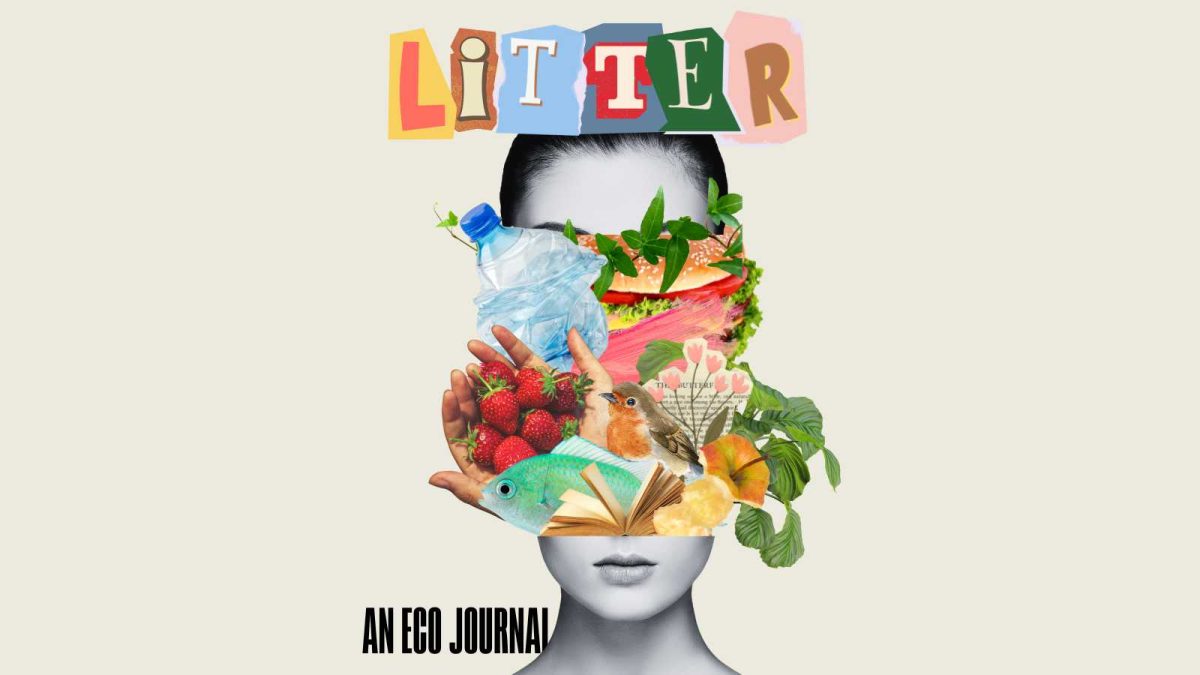
The Eco Journal – Litter
EDC launched the inaugural issue of the eco-journal, Litter. This issue, titled “Reactionary Politics” brings together poetry, essays, and visual artwork to envision ecological futures, offering a space for radical imagination and creative intervention at a moment when democratic erosion and extractive systems threaten possibilities for multi-species justice.
|
| |
Platform Updates
The newly launched topic forums envision a broader ecosystem of knowledge and action, one that connects designers, researchers, artists, and activists across disciplines and geographies who share a commitment to ecological futures. These spaces aim to cultivate dialogue that transcends any single organization, seeding collaborations and ideas that can ripple outward into the wider world.
We’re pleased to introduce a fresh new landing page for the Ecological Design Collective website. This updated design makes it easier to explore our projects, team, and mission. We hope you enjoy navigating the site and learning more about our work. |
| |
|
We would like to express gratitude to the Krieger School of Arts and Sciences at Johns Hopkins University, the Center for Creative Impact at the Maryland Institute College of Arts (MICA), the School of Architecture & Planning (SA+P) at Morgan State University, Cloud68, the Climate Imaginarium, and the Institute for Planetary Health. We would like to thank our community partners Baltimore Museum of Arts, Baltimore Just Transition, Blue Light Junction, Cambium Carbon, MICA Center for Creative Impact, Station North Tool Library, JHU Sustainability, and Red Emma’s. We would also like to thank our curators and coordinators for shaping this year’s programming, the administrators at the Anthropology Department of JHU for supporting our operation, and our engineers for sustaining our infrastructure. |
| |
|
Support Us
As we close 2025, we invite you to invest in the work of ecological imagination. We are a non-profit organization dedicated to fostering dialogue, creativity, and action at the intersection of design, ecology, and justice. Your contribution helps us offer content that’s open and accessible to our community, compensate artists and educators, and build the infrastructure for a growing community of practitioners committed to regenerative futures. Every gift, of any size, sustains this work and helps us dream bigger. We hope you’ll consider supporting us.
|
| |
|
We're excited for what the coming year has in store! Stay tuned! |
| |
Ecological Design Collective
Nurturing radical ecological futures
A fiscally sponsored project of Inquiring Systems Inc., 501(c)3
| |
|