|
This spring, the Ecological Design Collective continues our year-long exploration of Antidotes to Toxicity—from new opportunities for collaboration to powerful artistic and scholarly work across our community. We’re excited to announce a pilot cycle of three $2,000 Project Awards supporting collaborative, Baltimore-based projects by EDC members.
We're celebrating the debut of our newest featured artist Aram Polster’s evocative sculptural work in our new online exhibit: The Injured Birds and Magical Things, and look forward to connecting with you this week through a poetry reading and artist talk by former featured artist, Rejjia Camphor, at the Crow's Nest.
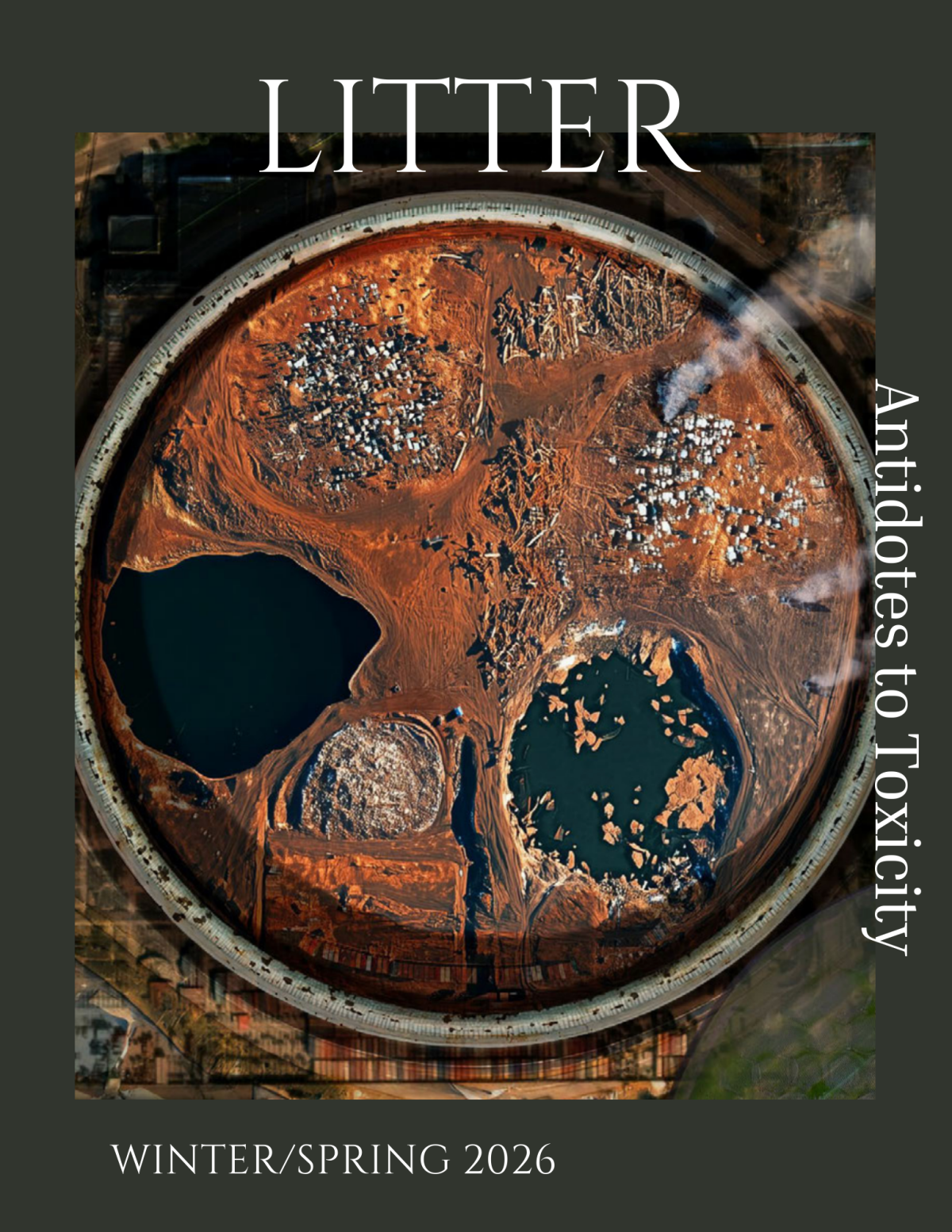
In case you missed it, the latest release of our Spring/Winter eco-journal Litter dropped last week. It's filled with provocations and curiosities to push our collective ecological imagining to new heights! Together, these offerings invite us to imagine and practice community-grounded responses to toxicity through art, design, dialogue, and imagination. |
| |
|
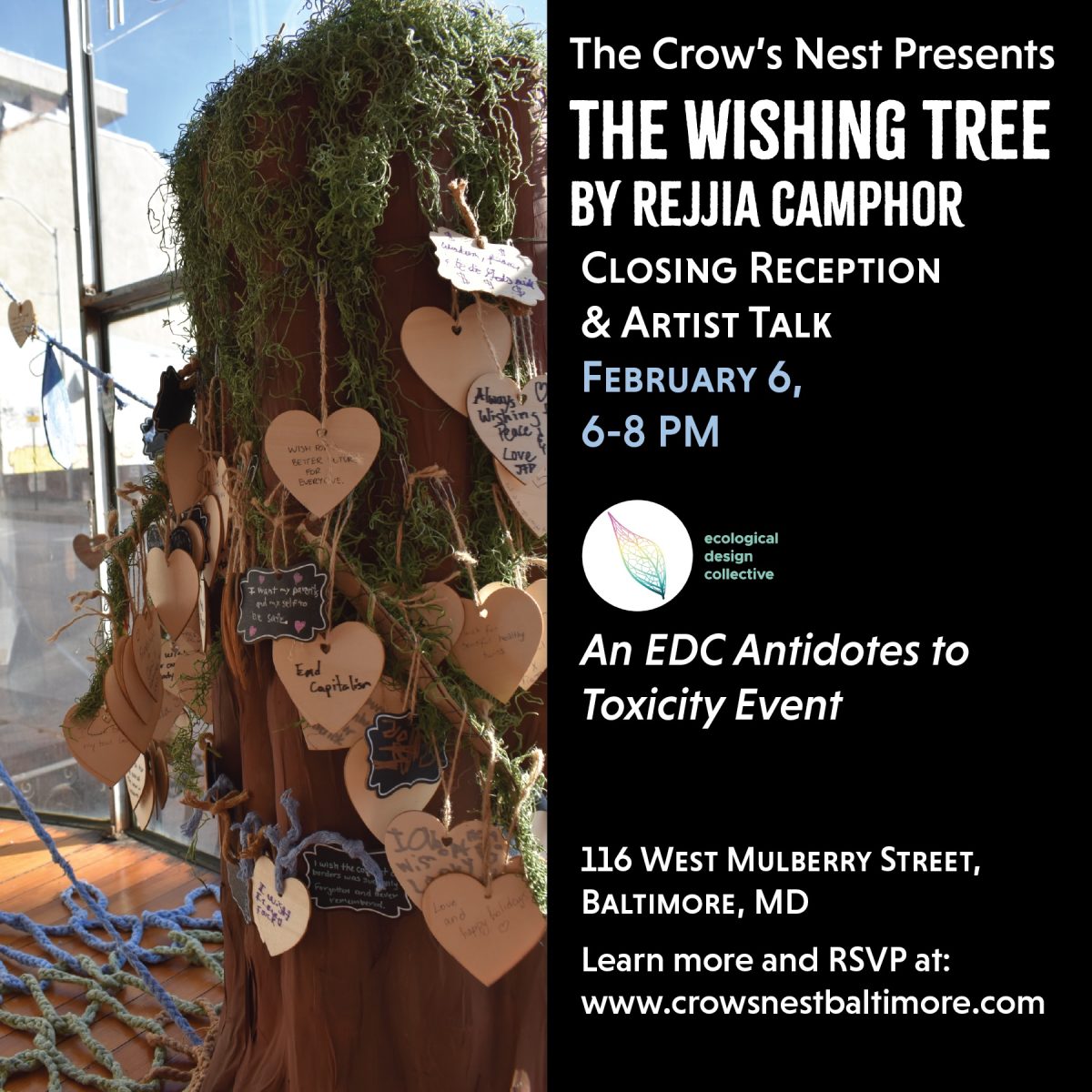
This Friday at the Crow's Nest:
|
| |
|
Rejjia Camphor is a transdisciplinary artist, educator, and organizer from Baltimore. She is the founder of Sister Stream Catcher, a initiative that uses art, activism, ritual and spirituality to reimagine conservation in Baltimore.
This Friday at the Crow's Nest, Rejjia will perform a poetry reading and give an artist talk, discussing her recent work: The Wishing Tree. If you're curious to learn more about Rejjia’s work, you can visit her online exhibit on the EDC platform.
This event is a part of the EDC's year-long celebration of Antidotes to Toxicity. You can visit the EDC Forum on Antidotes to Toxicity to see what others are saying about Rejjia's work and its connection to this year's theme and post a question for the artist. |
| |
|
Our collective has been dreaming up new ways to support innovative, community-grounded work by EDC members. We’re thrilled to announce a new initiative designed to foster deeper engagement, collaboration, and shared ecological imagination across the community.
To support opportunities for collaboration among members of the collective, we are launching a pilot cycle of $2,000 Project Awards aligned with our 2025–26 annual theme, Antidotes to Toxicity. Three awards will support collaborative, interdisciplinary projects that explore ecological design responses to toxicity—social, environmental, material, or otherwise.
Projects may take many forms, from artistic or expressive work to events, media, or physical interventions. If you have an idea that could benefit from modest funding, community feedback, and connection with fellow EDC members, we invite you to participate. The process begins with sharing your project idea on the EDC community forum, where proposals are shaped through dialogue and collective learning before final submission.
Interested collaborators must be EDC members and projects should be based in or around Baltimore for this pilot year. Learn more about the theme, eligibility, and how to get involved—and join the conversation—on the EDC platform. |
| |
|
Dive into the latest issue of Litter: Antidotes to Toxicity |
|
Explore the Spring/Winter 2026 issue of our online eco-journal: Litter. Through poetry, essays, art, and photography, this collection explores the many ways we identify, imagine, and design responses to both literal and figurative toxicities.
In these works, you'll encounter expositions of water justice in Oaxaca and coal contamination in West Virginia, learn to embrace slow-lives through lichen-inspired ways of seeing, and get swept up in eerily beautiful imagery of superfund sites. There is so much to explore in this issue; we can't wait to hear what new imaginings these works stir up! |
|
|
| |
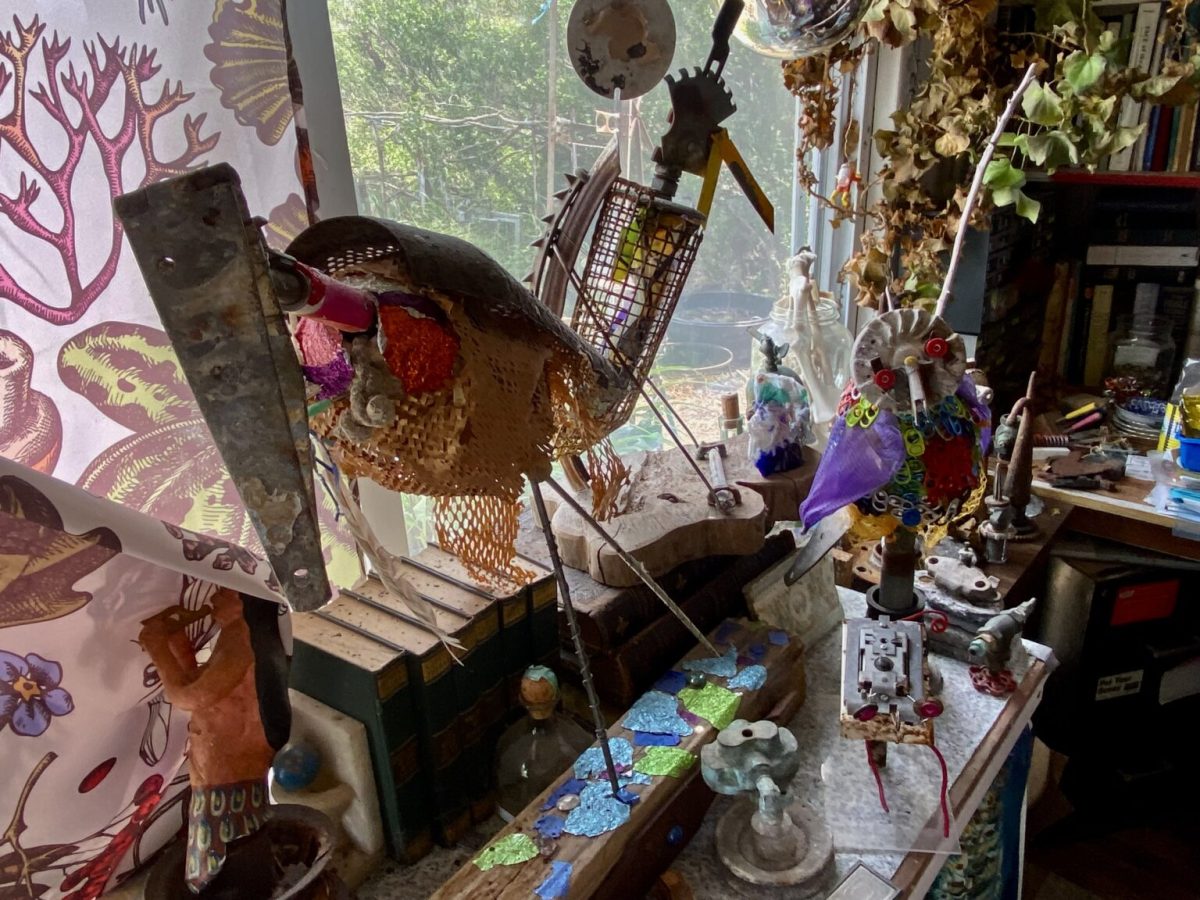
Meet our New Featured Artist: Aram Polster
“My creativity is connected to a fluidity of water...I like being near the water and collecting objects transformed by the environment.”
-- Aram Polster |
| |
|
From his marshland home on Smith Island, Maryland, Polster refigures discarded metals into fantastical creatures, playing with notions of place, time, and disposability. His collection, The Injured Birds and Magical Things provides a glimpse into a world that celebrates decay through playfulness, reverence, and ecological care. |
| |
|
Find new ways to connect through events and opportunities on the EDC platform:
- Call for Proposals: The 2026 Wormfarm Decomposium invites proposals for sessions, lectures, panels, or artworks that celebrate decomposition and renewal, due Feb. 9th
- Join EDC curator, artist, plant medicine educator, and clinical herbalist Alyssa Dennis for Herbal Compass CSA: Navigating Healing Throughout the Calendar Wheel, meeting one Saturday per month from March – October.
- Planetary Political Ecologies: 2026 Wageningen Political Ecology Spring school, 13-17 April 2026
- Call for Art: The Crow's Nest is seeking proposals for a new exhibit, SOLARPUNK, which invites artists to share their visions for a more harmonious and just world, due March 3rd
- Call for High School Artists: The Crow's Nest is also seeking youth artists to be a art of their exhibit "Claiming the Future", due April 3rd
- Syntropy / Entropy: Experience a land-based inquiry exploring possibilities for making, creating, and relating otherwise through an innovative residency, based in mutual care and stewardship, at a farm in the Sierra Nevada, Spain. April, 2026
|
| |
**Important Note About the EDC App**
Our team is working on a new EDC app to capture new features and improvements to our site. In the meantime, the old app has been disabled. If you are having trouble accessing our site, please delete the app and use your web browser instead. Thanks for your patience! |
| |
Ecological Design Collective
Nurturing radical ecological futures
A fiscally sponsored project of Inquiring Systems Inc., 501(c)3
| |
|