
End of Year Reflection 2025
As 2025 draws to a close, the Ecological Design Collective (EDC) reflects on a year of change and making. The first half of the year invited us to Reimagine the Land, rethinking our relationships with place, soil, and the living systems around us. In the second half, we turned toward Antidotes to Toxicity, naming what harms us and cultivating what heals. Through workshops, conversations, and creative experiments across both themes, we explored how design, art, and ecological thinking can reshape our environments, systems, and relationships. Together we sought connection through care and creativity.
Grounding series
On January 29, we held a Natural Dye Workshop. Guided by the traditions of resist dyeing from China, India, and Japan, participants explored techniques that shape how fabric interacts with dye, using an indigo vat cultivated in alignment with natural processes..
Cambium Fallen Lumber Tour was a tour at a company transforming the urban wood supply chain by partnering with cities and local businesses to salvage fallen trees, keeping valuable materials out of landfills and giving them a second life as sustainable, traceable lumber.
We held two events with Jones Falls. Jones Falls Workshop invited participants to reimagine the future of the Falls, Baltimore’s most essential yet long-neglected waterway. Taking inspiration from The Peale’s exhibition “The Future of Here: A Glimpse of a River Culture to Come,” participants engaged in speculative exercises, hands-on modeling, and a walk to the river’s mouth to envision what ecological restoration could look like as the Jones Falls Expressway nears its end of life. During the Jones Falls Industrial History Tour, we explored the industrial history of the Jones Falls River, led by historian Bill Harvey and anthropologist Nicole Labruto, traveling by van alongside the waterway with stops to discuss its past.
We gathered at the Eclipta Herbal Sanctuary to tour the 0.7-acre healing space in Northeast Baltimore, home to over 100 species of medicinal plants, led by founder and clinical herbalist Alyssa Dennis. We explored ecological education, conservation, and community healing practices.
A roundtable titled “A Year of Reimagining Land: A Roundtable Retrospective” brought together artists, anthropologists, historians, and community organizers to reflect on a year of “Groundings” events exploring land as a site of repair, kinship, and ecological design rather than a commodity. Participants discussed how storytelling, artmaking, and land-based practices can foster more just and reciprocal relationships with place in Baltimore and beyond.
Rashid Awari and Eric Jackson (Black Yield Institute) join in a transatlantic dialogue on Black land and food sovereignty, “Roots and Futures: A Transatlantic Perspective on Black Land and Food Sovereignty,” explaining how African and African American communities reclaim identity through ancestral knowledge and traditional practices. The conversation examines language, oral history, and foodways as pathways toward healing and self-determination.
We held the Black Earth Rising Exhibition Tour, a guided walk at the Baltimore Museum of Art. The tour explored an exhibition curated by Ekow Eshun, featuring 22 works on the climate crisis, celebrating Indigenous land management practices and our shared connections to the natural world.
We hosted Cut, Paste, Ground: a collage exhibit and workshop for collective healing. Led by by Baltimore creatives and change-makers Michelle Geiss, Alyssa Dennis, and Rachel Cloud Adams, visitors were invited to immerse themselves in a fantastical office jungle of collage. Taking inspiration from the collage-adorned walls, desks, and artifacts, they were then invited to cut, paste, tear, and reassemble, using found materials to infuse their own creative works.
A family-friendly Invasive Grass Removal workshop took place. Participants learned to identify and remove wavy basketgrass, a fast-spreading species threatening local forests, while celebrating Rosh Hashanah through an act of care and restoration for the land. Our reach extended to new international markets.
EDC organized a tour of the exhibition “Deconstructing Nature: Environmental Transformation in the Lucas Collection” at the Baltimore Museum of Art. The exhibition was presented as part of the museum’s “Turn Again to the Earth” environmental initiative. Drawn from the BMA’s George A. Lucas Collection, this exhibition of 19th-century art foregrounds the many ways that human relationships, including imperialism and capitalism, affect the environment.
Collaborating with Baltimore Just Transition, we held the Environmental Justice Dialogue and Dinner, a gathering at Red Emma’s featuring updates from local advocates on environmental justice campaigns, including the CHERISH Communities Act, public power efforts, and follow-up on accountability to the Maryland Department of the Environment.
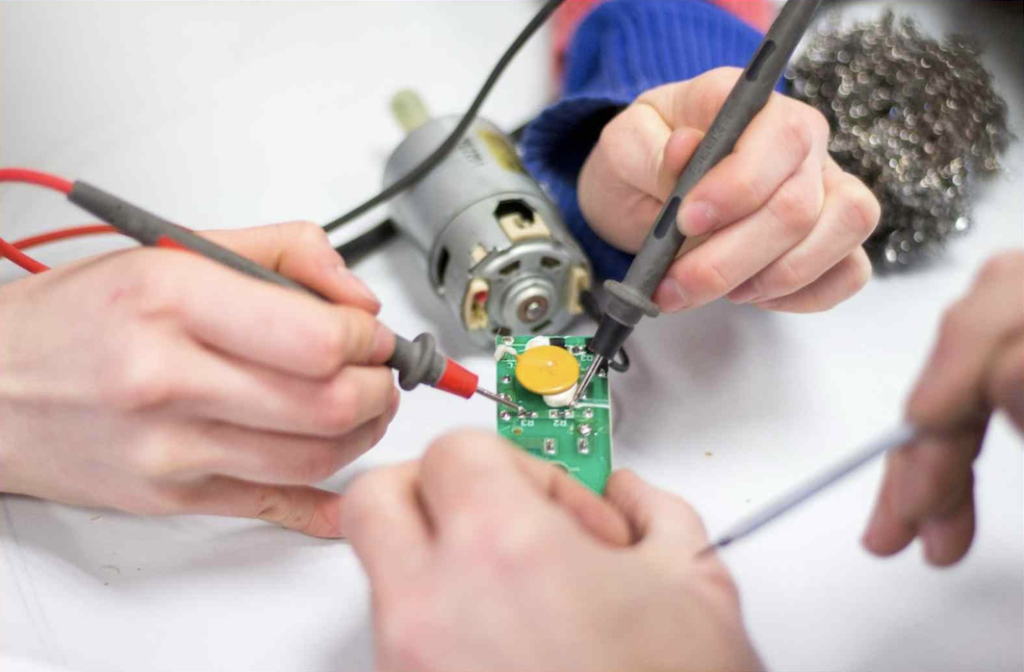
We convened at the Station North for “Tool Libraries and Repair Communities” with Jessa Wais and Blanca Callén Moreu to discuss repair communities in Baltimore and Barcelona. Moderated by Anand Pandian, one of the curators at EDC, the evening brought together practitioners at the heart of the repair movement.
Scholar and writer Eben Kirksey delivered a speech on Decentered Multispecies Design. Expanding empathy beyond humans, multispecies design creates habitats and protective infrastructures for endangered plants, animals, fungi, and microbes, fostering ethical encounters and new practices of responsibility in an era of extinction.
Online Events
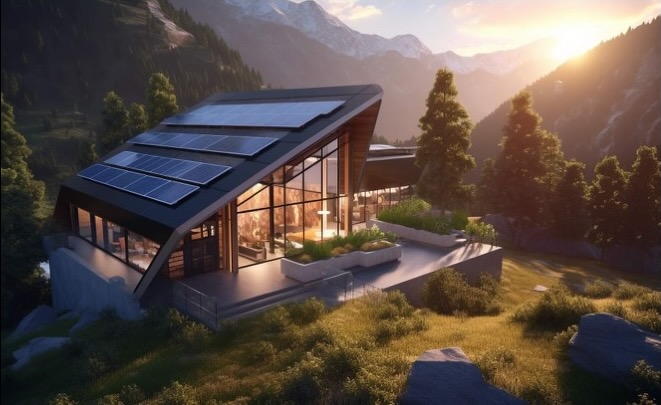
An online seminar with EDC Curator and anthropologist Michael Degani exploring the history of the passive house. This event examined whether its air-tight, highly insulated design reconnects dwellers to their environment or isolates them from it, and how such projects navigate historically toxic energy infrastructures.
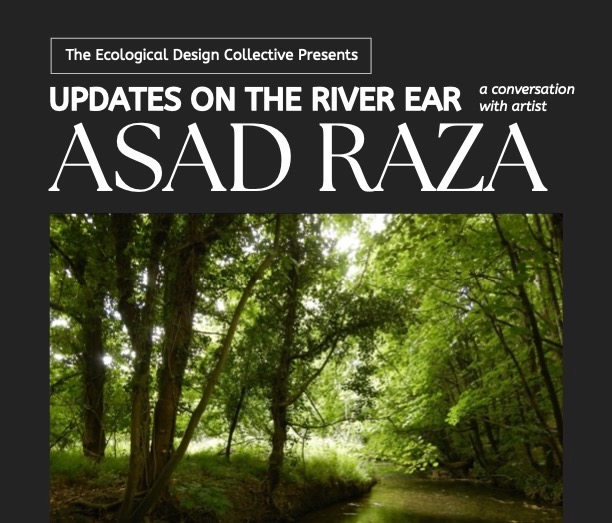
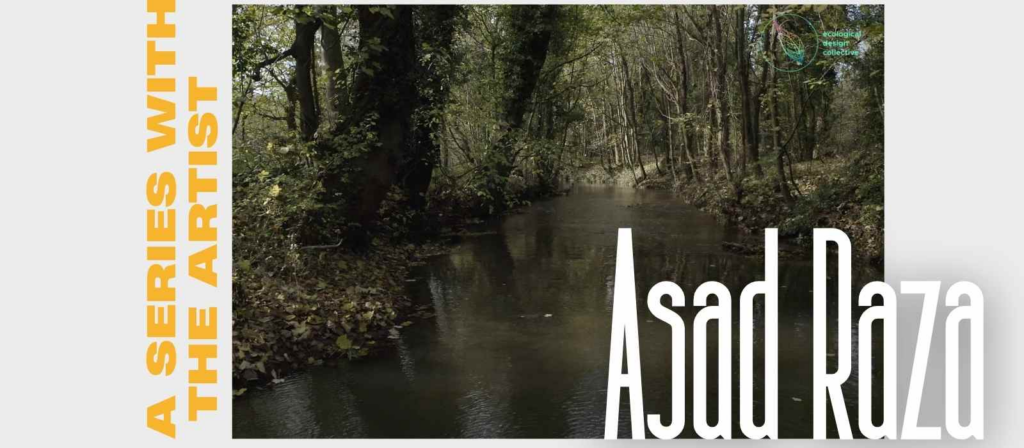
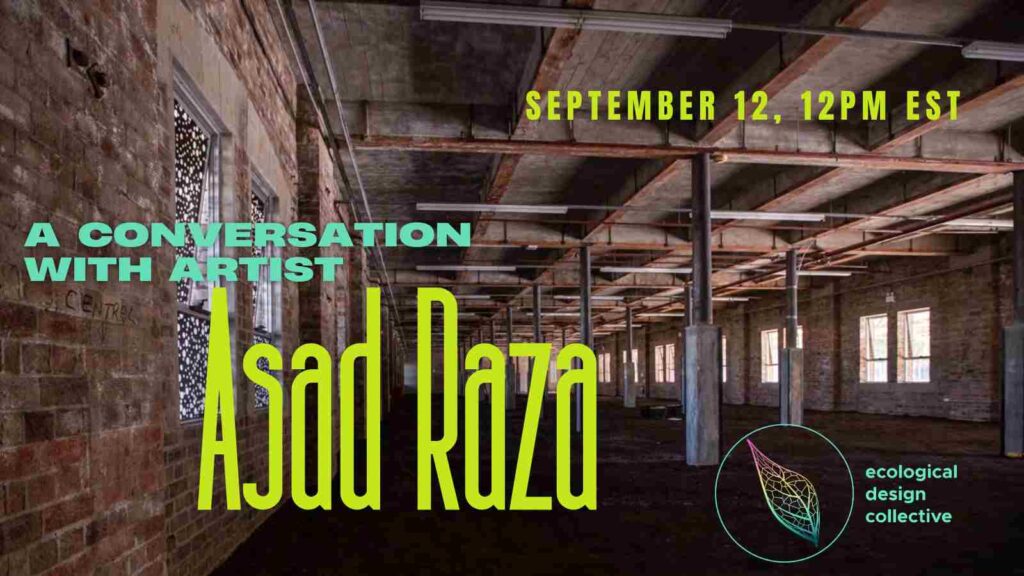
Conversations between EDC curator Kristine Roome and artist Asad Raza. From planting nitrogen-fixing lentils in century-old soil to displaying climate-adapted trees with human caretakers, and designing an ear-shaped pavilion to amplify the sound of an English chalk stream, we explored Raza’s “metabolic” exhibition practice.
Projects
Jones Falls 2076 is a collaborative initiative led by Lee Davis, a designer and social entrepreneur who co-directs MICA’s Center for Creative Impact, Anand Pandian, an anthropologist and author from Johns Hopkins University who co-founded the Ecological Design Collective, and Bruce Willen, an artist known for the Ghost Rivers public art project and founder of Public Mechanics studio. The project is supported by the Ecological Design Collective, Johns Hopkins University, and MICA’s Center for Creative Impact, and the Chesapeake Bay Trust, T. Rowe Price Foundation.
The Ecological Design Collective is dedicated to continuously supporting projects that reimagine the relationship between communities, infrastructure, and the built environment. Through sustained funding and collaborative partnerships, EDC will nurtures initiatives that bring together designers, urban planners, scholars, and community members to envision more resilient and ecologically vibrant futures.
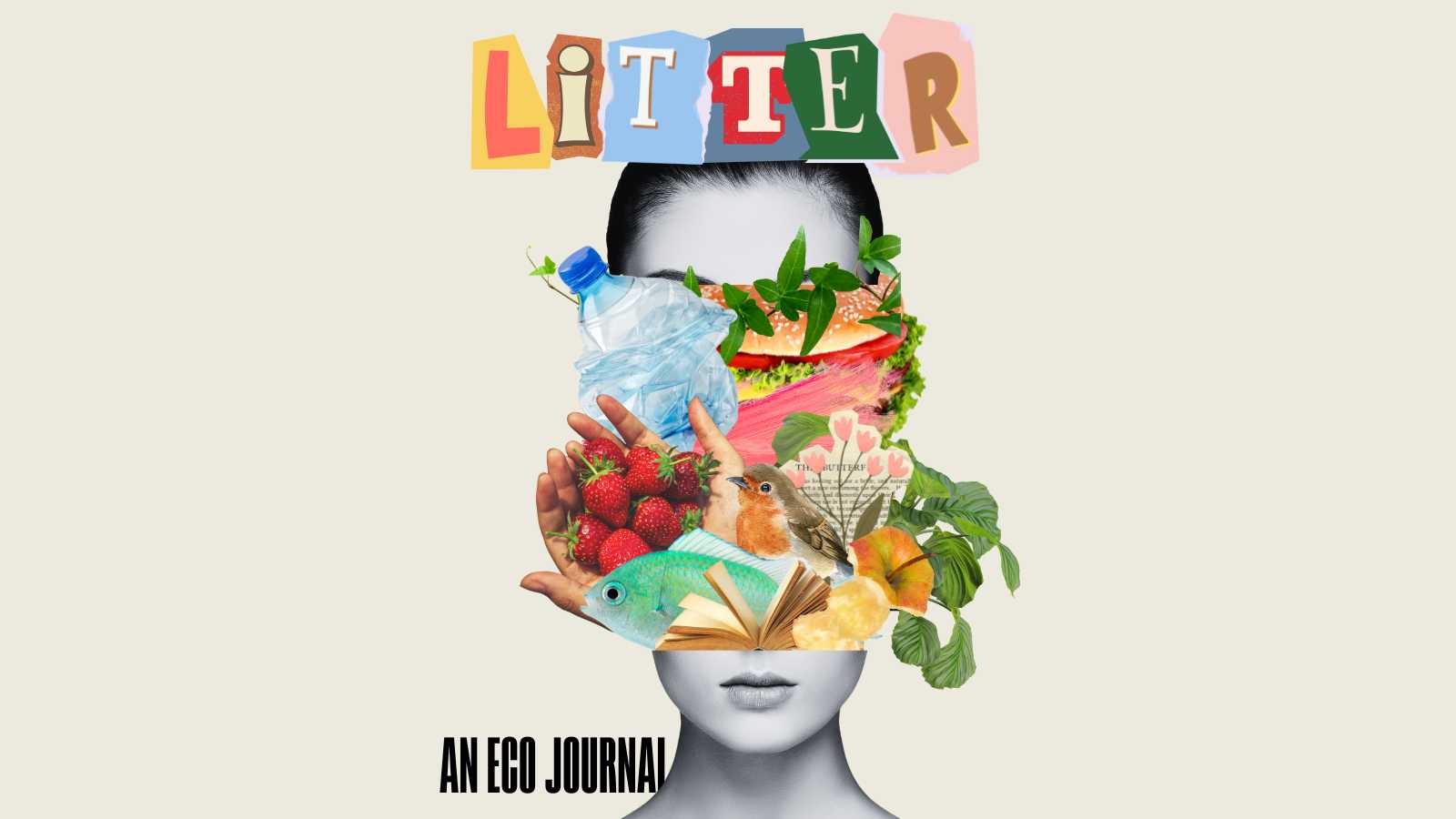
The Eco Journal – Litter
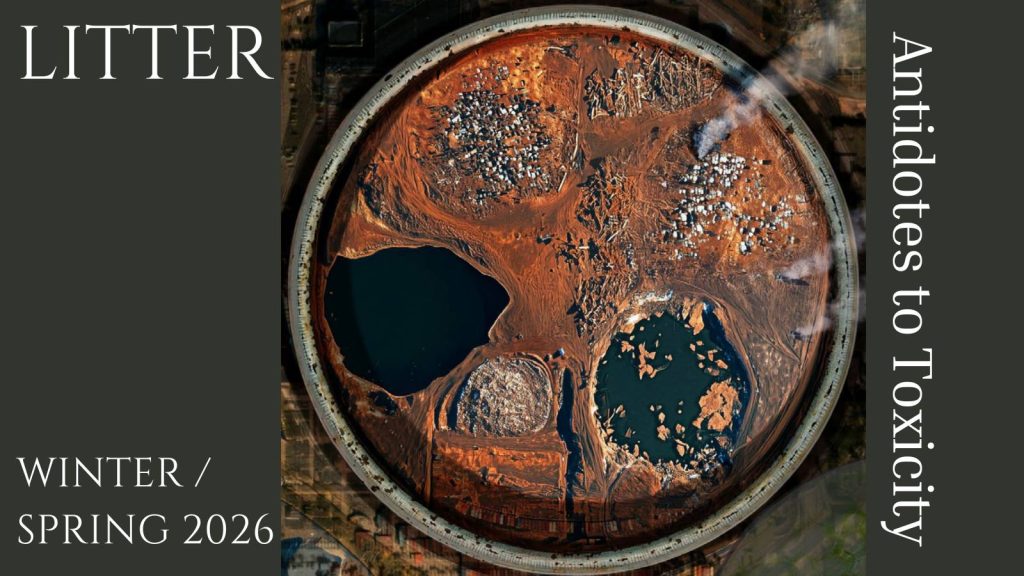
EDC launched the inaugural issue of the eco-journal, Litter. This issue, titled “Reactionary Politics” brings together poetry, essays, and visual artwork to envision ecological futures, offering a space for radical imagination and creative intervention at a moment when democratic erosion and extractive systems threaten possibilities for multi-species justice.
Platform Updates
The newly launched topic forums envision a broader ecosystem of knowledge and action, one that connects designers, researchers, artists, and activists across disciplines and geographies who share a commitment to ecological futures. These spaces aim to cultivate dialogue that transcends any single organization, seeding collaborations and ideas that can ripple outward into the wider world.
We’re pleased to introduce a fresh new landing page for the Ecological Design Collective website. This updated design makes it easier to explore our projects, team, and mission. We hope you enjoy navigating the site and learning more about our work.
Nourished by Community
We would like to express gratitude to the Krieger School of Arts and Sciences at Johns Hopkins University, the Center for Creative Impact at the Maryland Institute College of Arts (MICA), the School of Architecture & Planning (SA+P) at Morgan State University, Cloud68, the Climate Imaginarium, and the Institute for Planetary Health. We would like to thank our community partners Baltimore Museum of Arts, Baltimore Just Transition, Blue Light Junction, Cambium Carbon, MICA Center for Creative Impact, Station North Tool Library, JHU Sustainability, and Red Emma’s. We would also like to thank our curators and coordinators for shaping this year’s programming, the administrators at the Anthropology Department of JHU for supporting our operation, and our engineers for sustaining our infrastructure.
Support Us
As we close 2025, we invite you to invest in the work of ecological imagination. We are a non-profit organization dedicated to fostering dialogue, creativity, and action at the intersection of design, ecology, and justice. Your contribution helps us offer content that’s open and accessible to our community, compensate artists and educators, and build the infrastructure for a growing community of practitioners committed to regenerative futures. Every gift, of any size, sustains this work and helps us dream bigger. We hope you’ll consider supporting us.


Responses