
by Kahin Vasi
Why go low? It’s a counter-intuitive action, running against the grain of sense and the gradient of the spirit. Deliberately to place something in the underland is almost always a strategy to shield it from easy view. Actively to “retrieve” something from the underland almost always requires effort for work. The underland’s difficulty of access has long made it a means of symbolizing what cannot openly be said or seen.
Robert Macfarlane, Underland
In the wake of extreme events, when floodwaters drain away and surges subside, detritus is left behind. Our interactions with an excluded Nature create detritus. In turn, excluded Nature creates detritus of our objects. To include Nature, then, is to court “detritivores”.
The exclusion of detritivores (such as saprotrophs and coprophages) from anthropic culture has had a slow, deep impact on planetary systems. Anti-biotic tendencies have eroded trophic ends. What remains is a landscape of un-cyclable objects. Objects which creep past human thresholds of time—shredded, sealed, burned, buried—forgotten.
Landscapes of Un-cyclable Objects
Forgotten and buried, detritus inhabits the land for decades-, centuries-, millennia, all the while, seeping, spewing hints of its existence into the planet. In many cases, it is likely that human knowledge of this existence will fade, but there would be tell-tale signs of something eerie underfoot.
A haunted land, an illegible symbol, a curse.
The index of superfund sites recorded by the United States Environmental Protection Agency can be read as the existence of a twenty-first-century Cthulhu. Terrifying, invisible entities which fester deep within the earth and our minds, rendering anthropic creations into madness. Ranging from radioactive pollution to “forever” chemicals, these sites may be uninhabited or remain toxic beyond ordinarily perceptible timescales.
It was Rachel Carson’s book, Silent Spring, which trained the human eye on forever chemicals and the sheer biological devastation dichlorodiphenyltrichloroethane (DDT) and other concentrated anthropogenic chemicals wrought on Life. Now, more than sixty years later, carcinogenic detritus seeps sinisterly under superfund sites, in soil and seabed sediment. Traces of this toxicity are “contained”, in a very superficial sense, within sites designated as Operable Units, buried and tarped-over. Despite the overwhelming response to the initial exposition of its detrimental effects on human beings and kin species, the fallout is nearly forgotten. The chemical is still used in tropical countries to control populations of disease vectors such as mosquitoes.
This chemical, very plainly, is a device used by humans to remove beings we deem unproductive and less-than-capital.
Our role as a “hyper-keystone species” seems to place us as apex beings with supreme worldmaking agency; it is more often the case that oddkin arise despite our exertion of control over other beings. Through the Holocene, human influence on ecological systems, our “culturing” of certain kin-species, and the recent recognition of technology as ontological actors has led to an explosion of “chimeras”. Chimeras, here, are signals of interactions and symbioses, planned and accidental creatures who arise
in the wake of human living.
The anti-toxin for silent seepage is confrontation.
To heal traumatized landscapes is to confront the source of the toxicity; to expose what is buried, and to unseal crypts which we cannot guard for several lifetimes. By allowing it to breathe out, we invite weird interactions between chimeras and the landscape. It is likely that such interactions would evolve over hundreds of human generations, where we find that even un-cyclable objects are rendered into something which can be metabolized by kin species who inhabit the world after us.
This project is an experiment in re-engaging un-cyclable objects—anthropogenic detritus—with unfamiliar detritivores. In doing so, we create new interactions between chimeras and an uninhabitable earth. Our role as facilitators of novel interactions cannot be limited to human timescales; sites such as those described above will likely remain uninhabitable through hundreds of generations. The beginning of interventions would likely be recorded and “legible” in time. Gradually, records will fade, and the
information bound to these landscapes will be obscured. By embedding information in the landscape, this project depends on the emergence of chimera-detritivores – an ecology of creatures which shouldn’t exist – evolved through novel interactions designed (and fallowed) by humans.
What does a menagerie of subversive interactions, of symbiogenesis and symtechnogenesis, look like?
The Zone
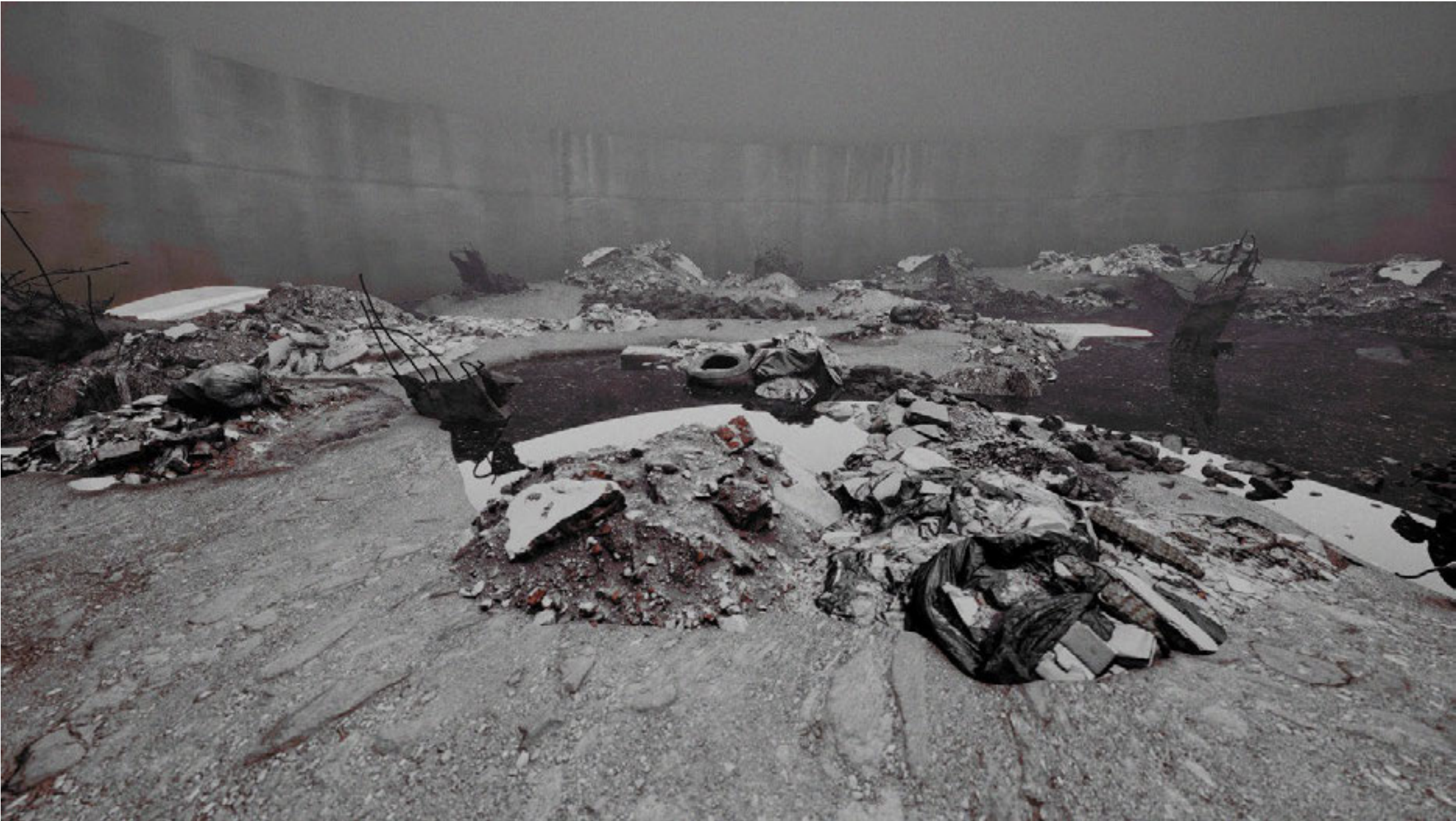
Dark tarps stretch over sealed toxicity. Asphalt caps cover the majority of the DDT manufacturing site. DDT concentrations reach a “very high” 10,000 PPM in shallow soils around the site. This is Operable Unit 1(OU1), located in Torrance, California. Our attitude towards toxicity is to seal it away; cover up the blighted earth. This proposal is antithetical to that notion. Rather than covering up scarred and toxified
landscapes, buried superfund sites and anthropogenic debris, we expose the toxin to the world. In doing so, we create volumes of land where interactions and intra-actions are spurred on, allowing detritivores to engage in new sapro-trophic pyramids. The site, no longer a false tabula-rasa, is rendered into a bloom of landforms which engage pluriversal dynamics between human beings, detritivores, and toxicity.
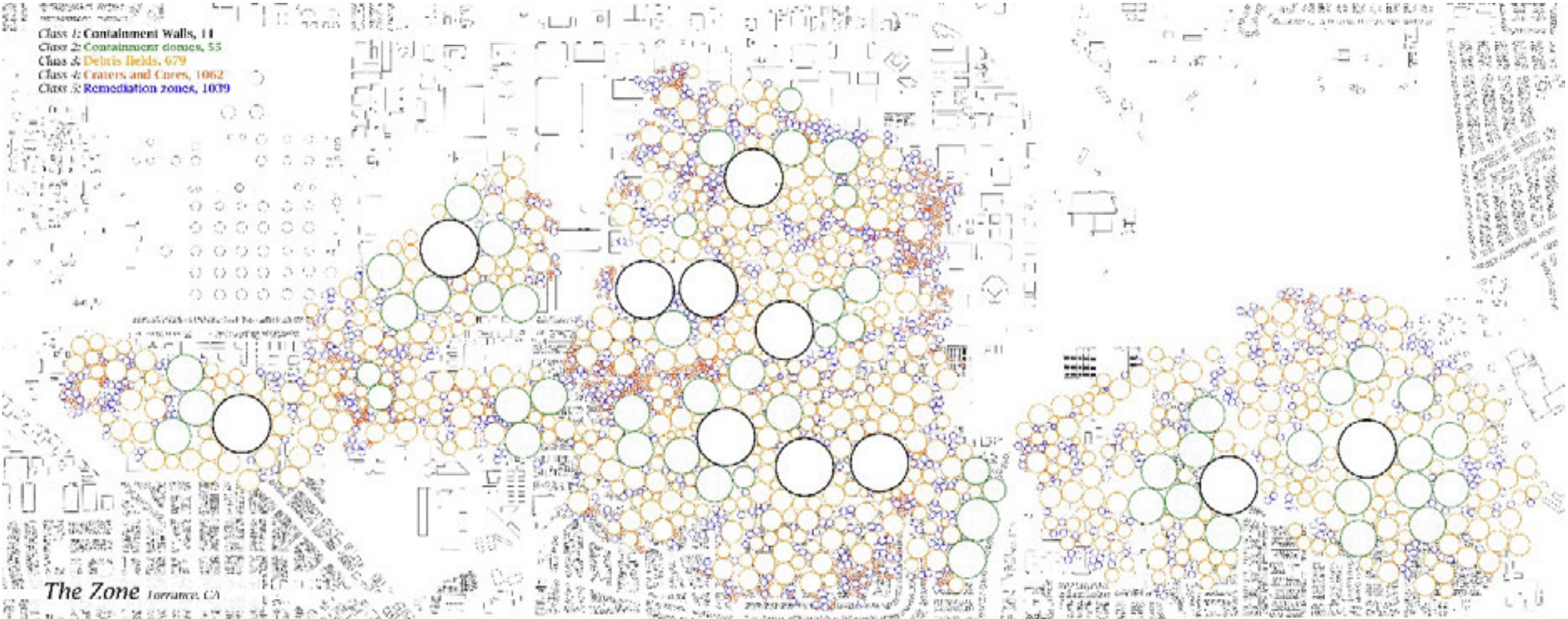
A Field of Blooms: Using algorithmic logic and circle-packing, the once industrial site is decimated into recursive regeneration. A series of intervention “Classes” function to create clusters of remediation zones. Created using Python, Rhino, and Illustrator.
The departure from an efficiency-first cartesian grid is equal parts aesthetic and cultural; by leaving edges and pockets between interventions, the designing-with of detritivore ecotones is given space.
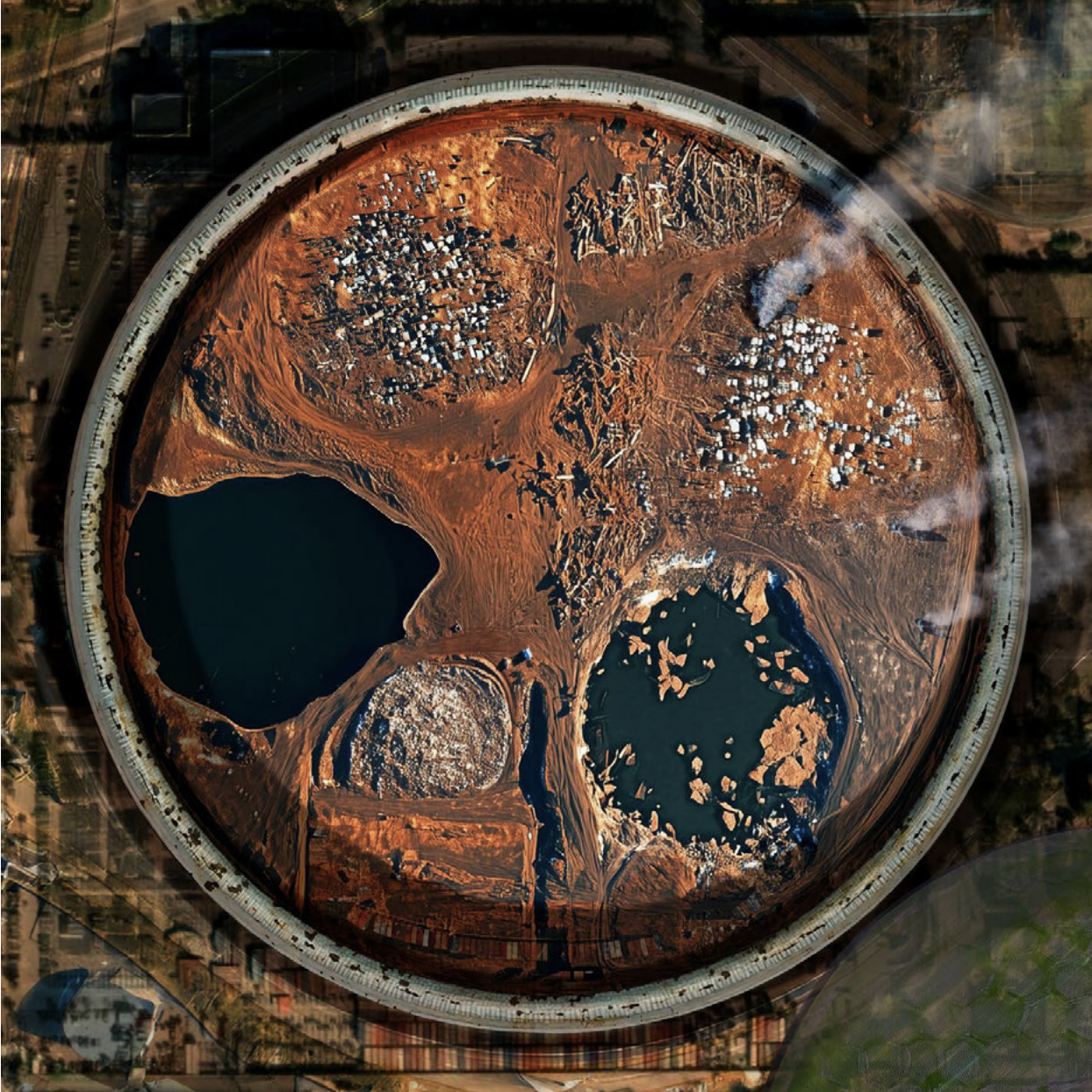
Remediation Class 1: The Containment Walls, at the center of highly toxic clusters are the raw, un-cauterized landscapes exposing the once-sealed sites to atmospheric elements. Created using Rhino, Midjourney V6 Retexture, and Photoshop.
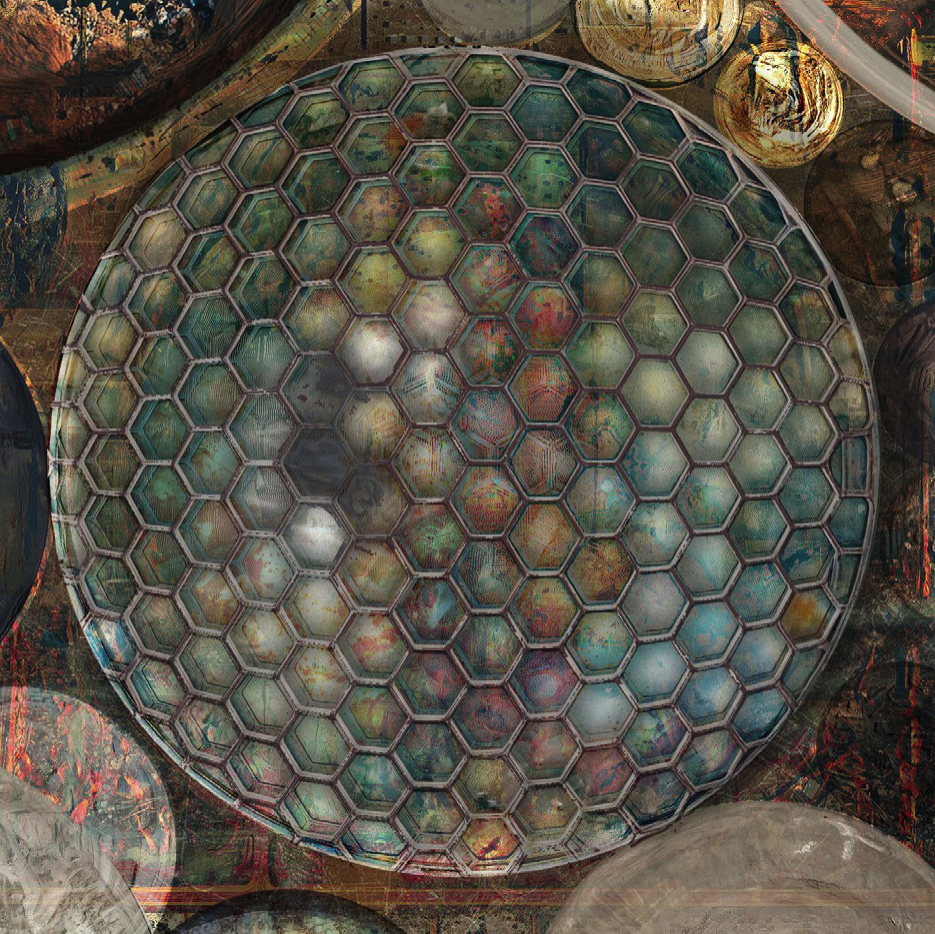
Remediation Class 2: Containment domes, temporary greenhouse structures inflated in zones adjacent to the walls, where PPE-Clad Homo technologis study the becoming-with of chimeras. Created using Rhino, Midjourney V6 Retexture, and Photoshop
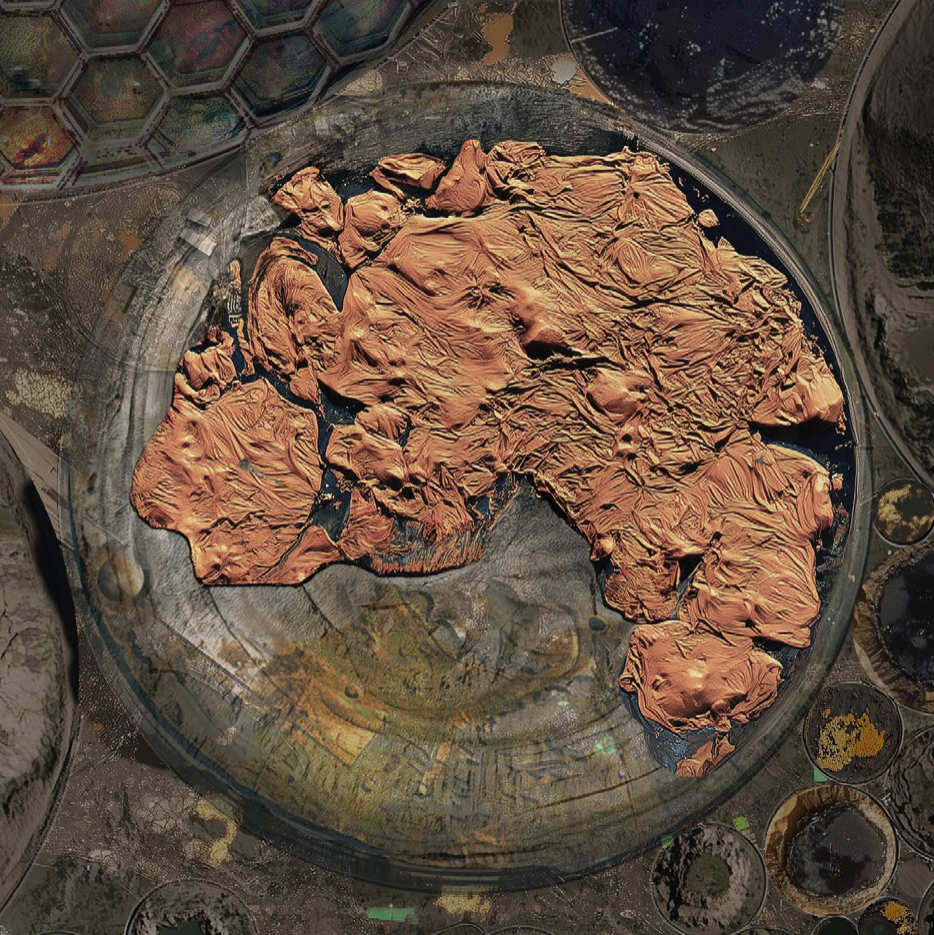
Remediation Class 3: Debris fields are new topologies created, excavated and contained under synthetic tarps. These micro-topologies are not sealed; they allow the gradual upward creep of chimera species from the environment. Created using Rhino, Midjourney V6 Retexture, and Photoshop
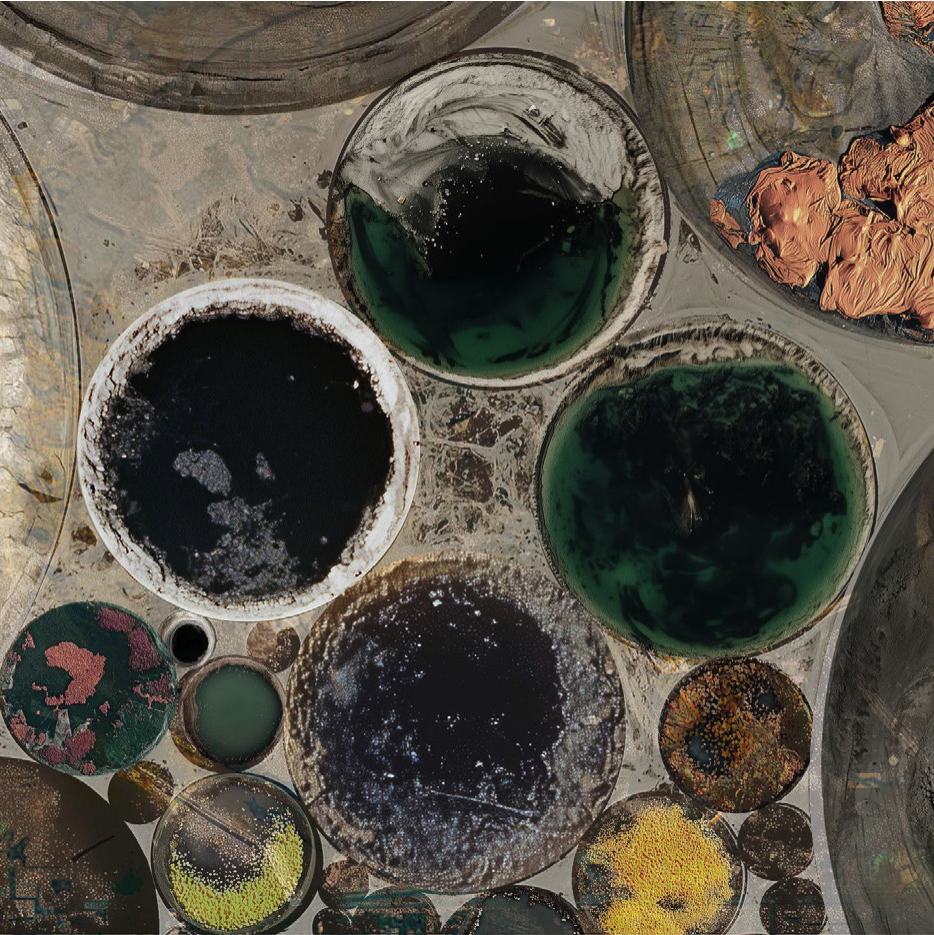
Remediation Class 4: Craters and cores, places where buried toxicity is brought to the atmosphere. Over time, these flood, fill with water, turning black, green, or red with blooms of extremophiles. Created using Rhino, Midjourney V6 Retexture, and Photoshop
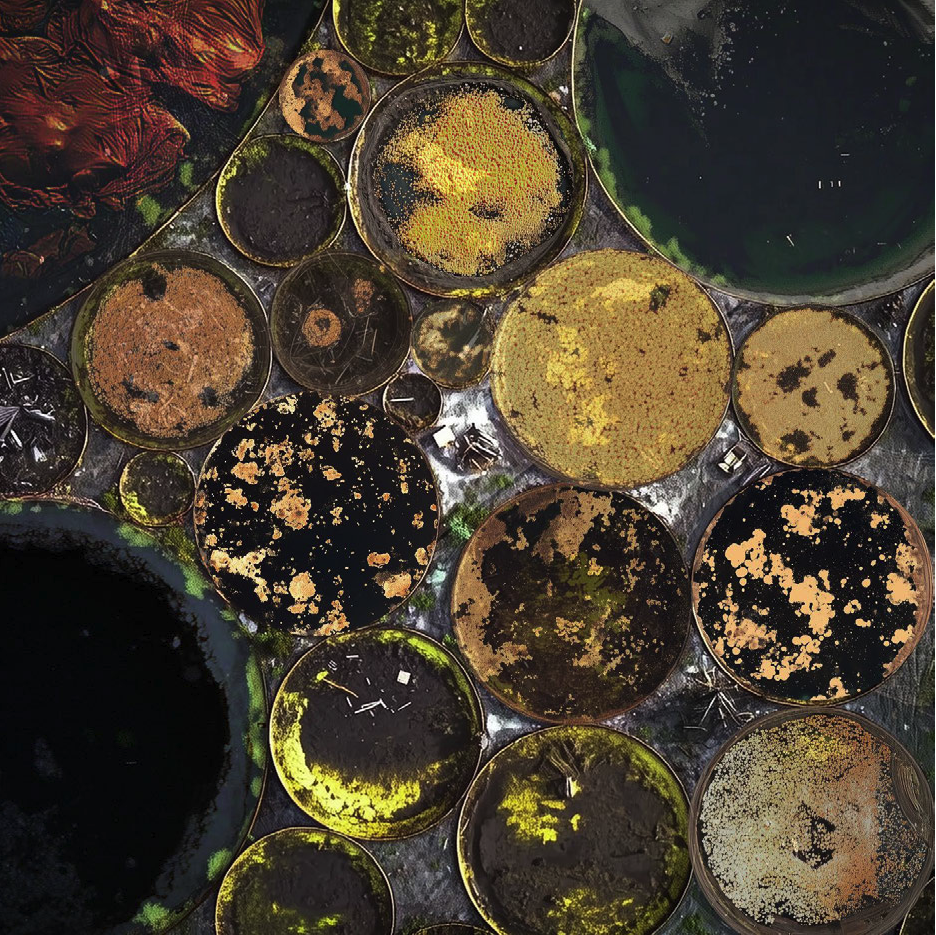
Remediation Class 5: Bioactive zones, where, by design, foam inoculated with bacteria, fungi and protozoa which metabolize DDT are sprayed into shallow pits. As the foam coalesces into a neo-primordial soup, the detritivore microorganisms ooze into the earth. Created using Rhino, Midjourney V6 Retexture, and Photoshop
In satellite images of The Zone, we see Operable Units and urban wastelands turn into lurid landscapes of symbiogenesis; the oxidizing remains of the built fabric paint the ground red. Exposed earth—dirt—is covered with alarming orange and water is neither clear nor glassy, but suffused with chimerical life.
These are not images of desolation. These are images of the process of healing.