
The Injured Birds and Magical Things
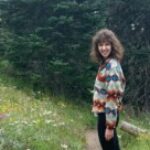
ARTIST: ARAM POLSTER
The Injured Birds and Magical Things
Interview and Images by Jana Kopelent Rehak
This show introduces Aram Polster, artist living full-time on Smith Island in Maryland. Aram’s sculptures embody imaginary birds, fish, and other imaginary animals. “My creativity is connected to a fluidity of water; being here on the island, around water is important to my life. I can be creative here in this environment, more than in any other place. I like being near the water and collecting objects transformed by the environment.” Aram Polster lives on the edge of the marshland in a red house with white trim on Flamingo Road, the last line in Ewell, a small village on Smith Island in Maryland. I met Aram when conducting my ethnographic research on Smith Island. I follow his artistic journey on my visits to his home studio, through our conversations about his work, and when I get lost in his ‘fantastic’ sculpture garden in his front yard.
Watcher Bird
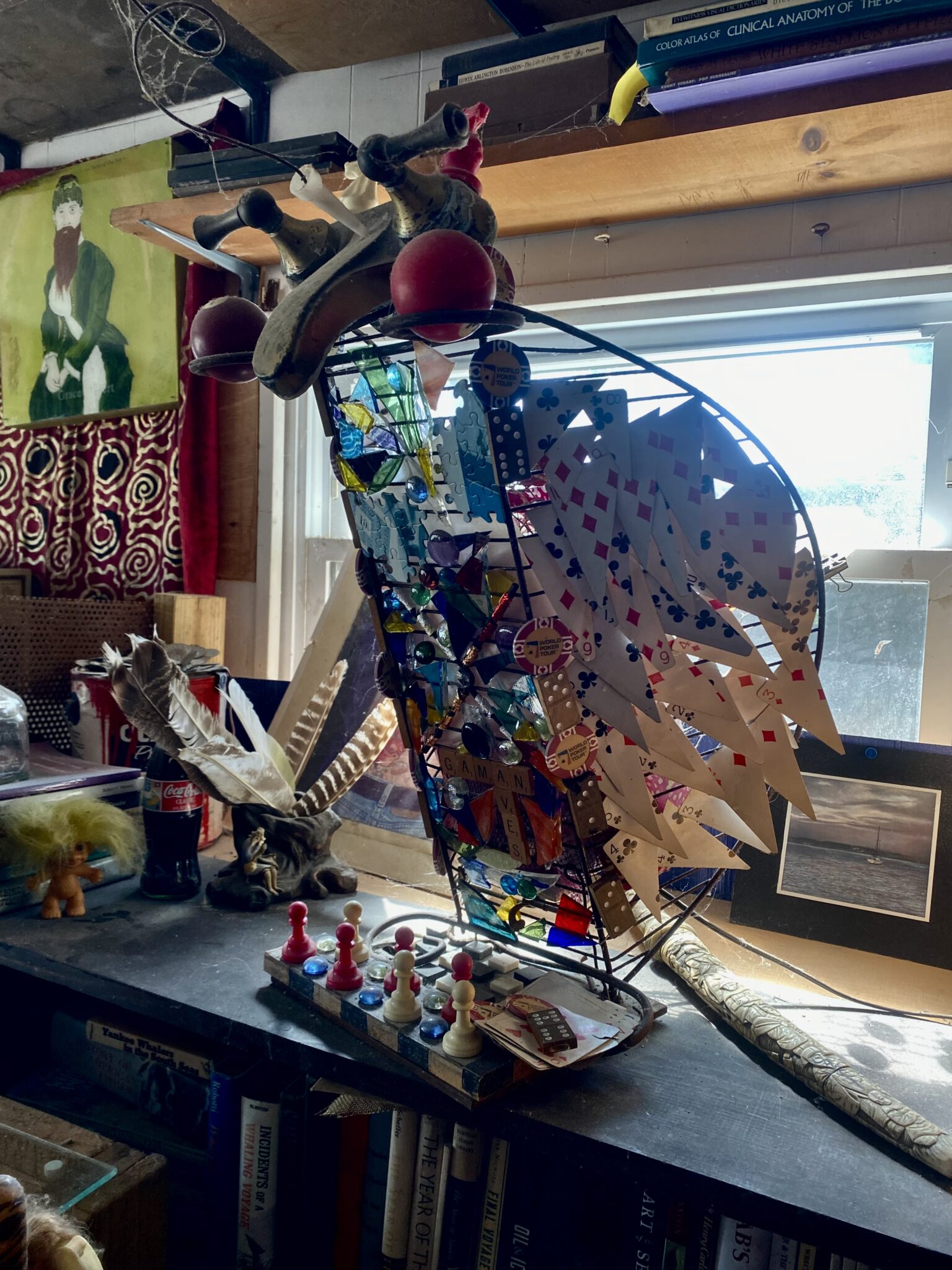
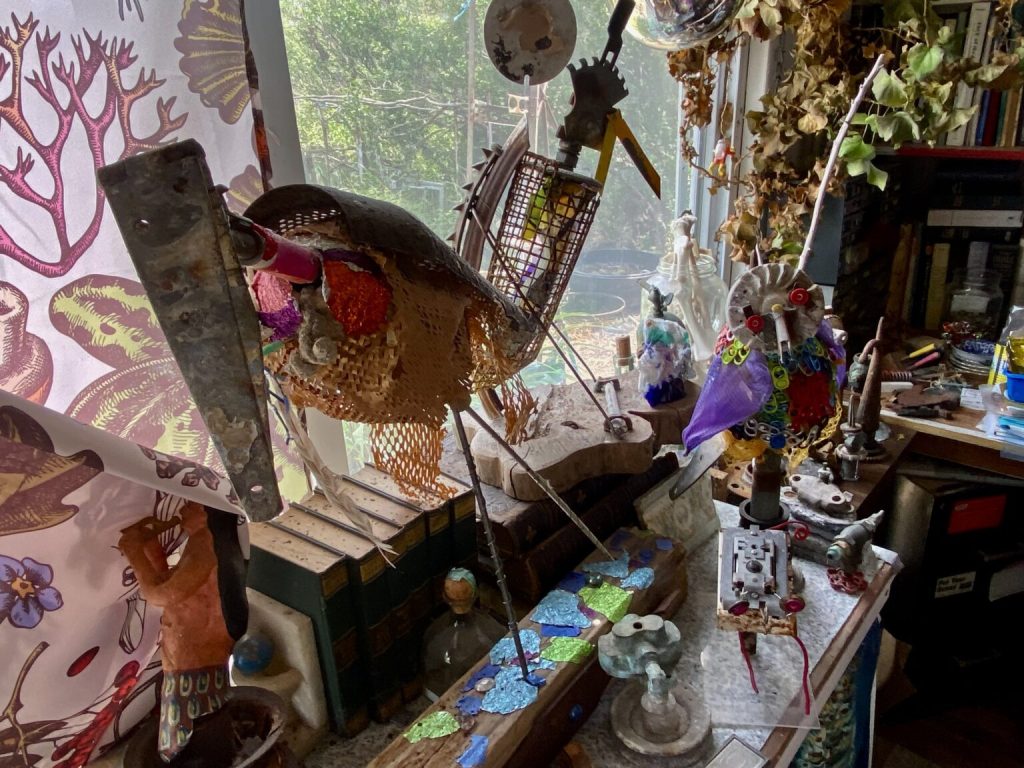
Empty blue glass bottles on branches of a small dead tree, old rusty engines given a bird’s personality with stick-on eyes, a propane torch transformed into the plague doctors, and a rusty circle with a blue eye at its center, are some of the garden sculptures Aram made from eroding objects found on the Island. His art shows ordinary objects in the light of poetic magic found in meta-reality [imaginative in the personification of material objects]. Seeing Aram’s art, I recall works of surrealist artists like Rene Magritte, Andre Bresson, Salvadore Dali, and Man Ray, who give agency to peculiar found things through visual media when blending the human body, with open landscapes and architectural interiors. The objects Aram finds on the island transform into soulful sculptures.
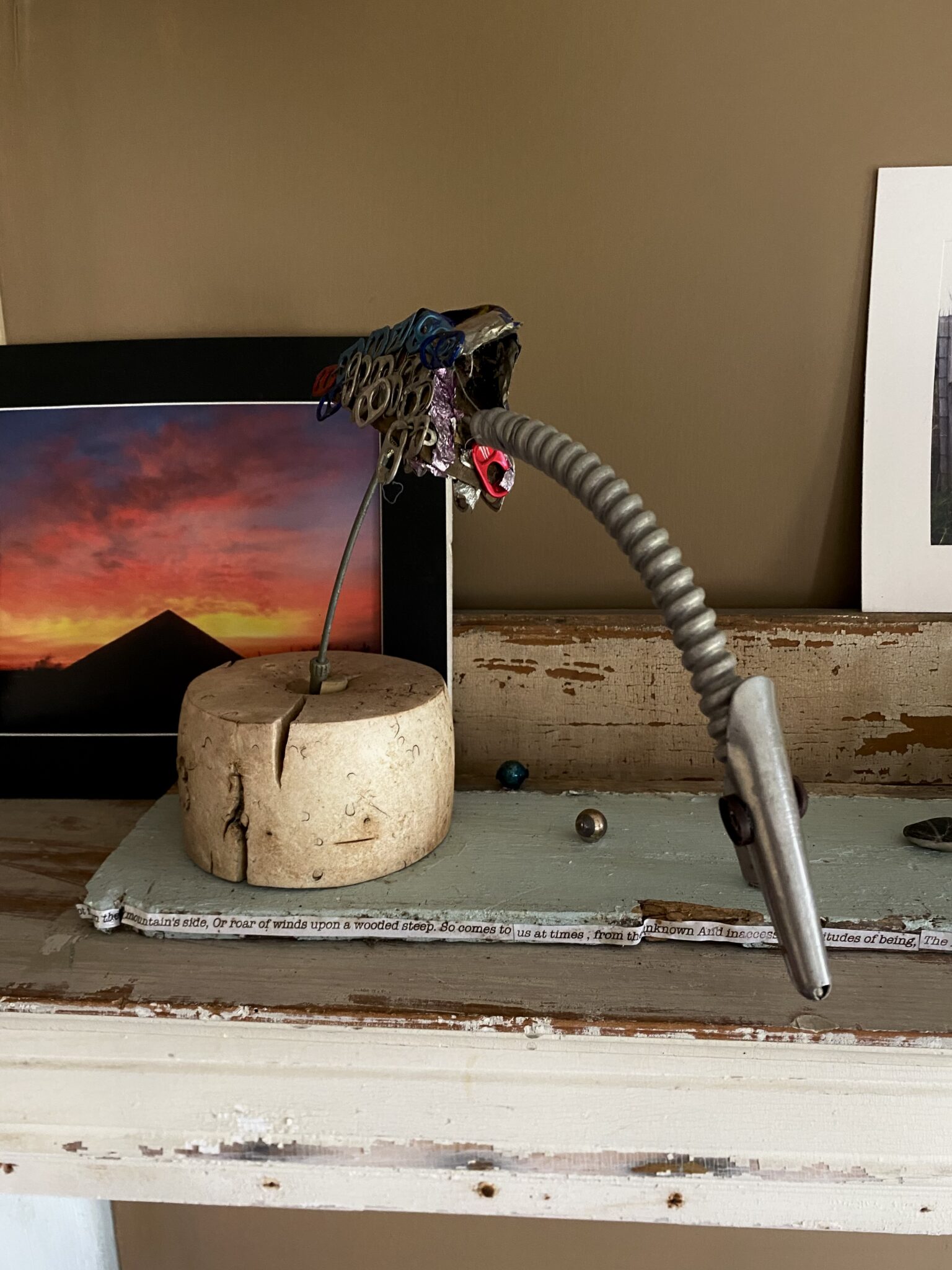
From series Injured Birds 1
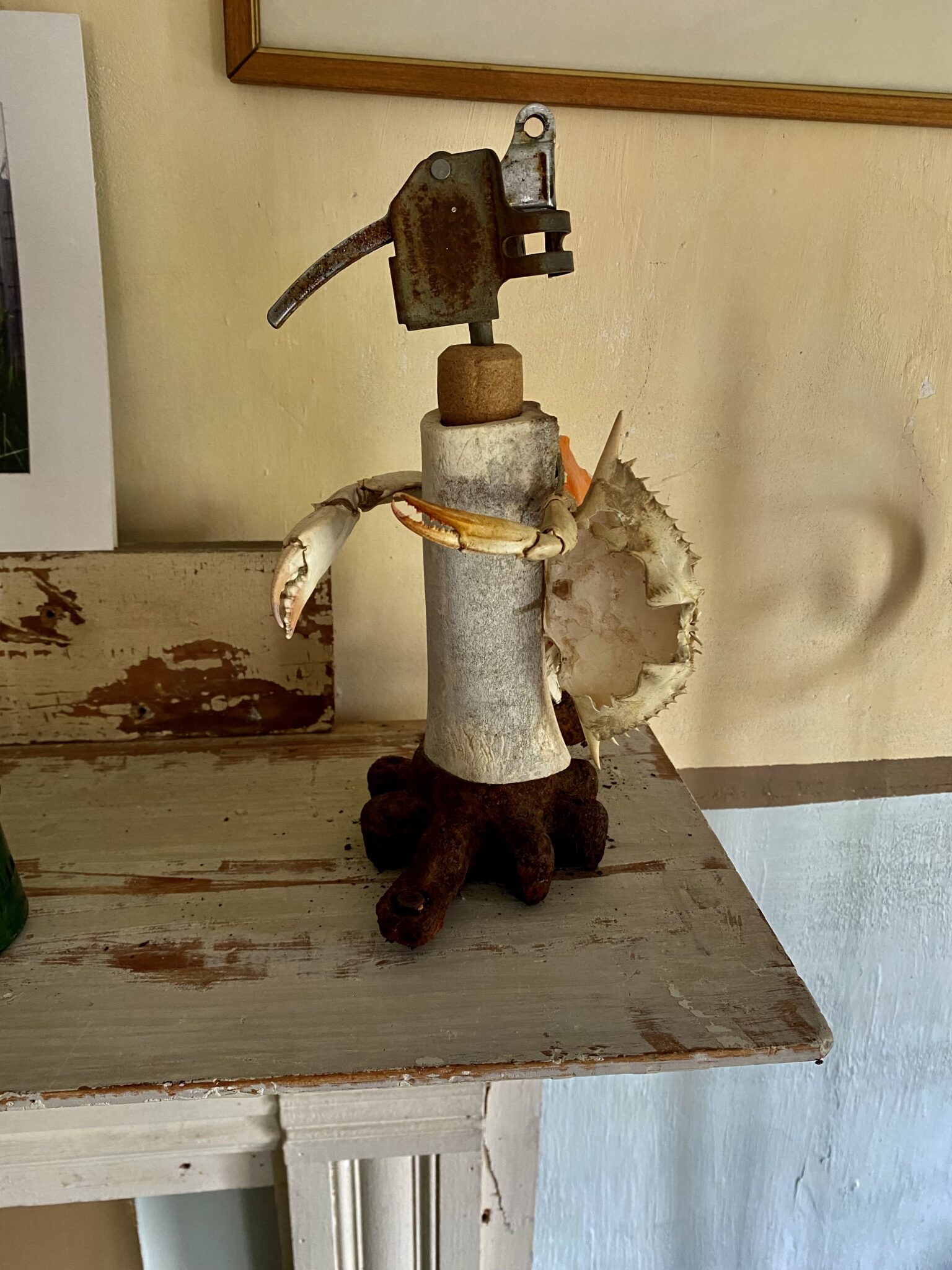
From series Injured Birds 2
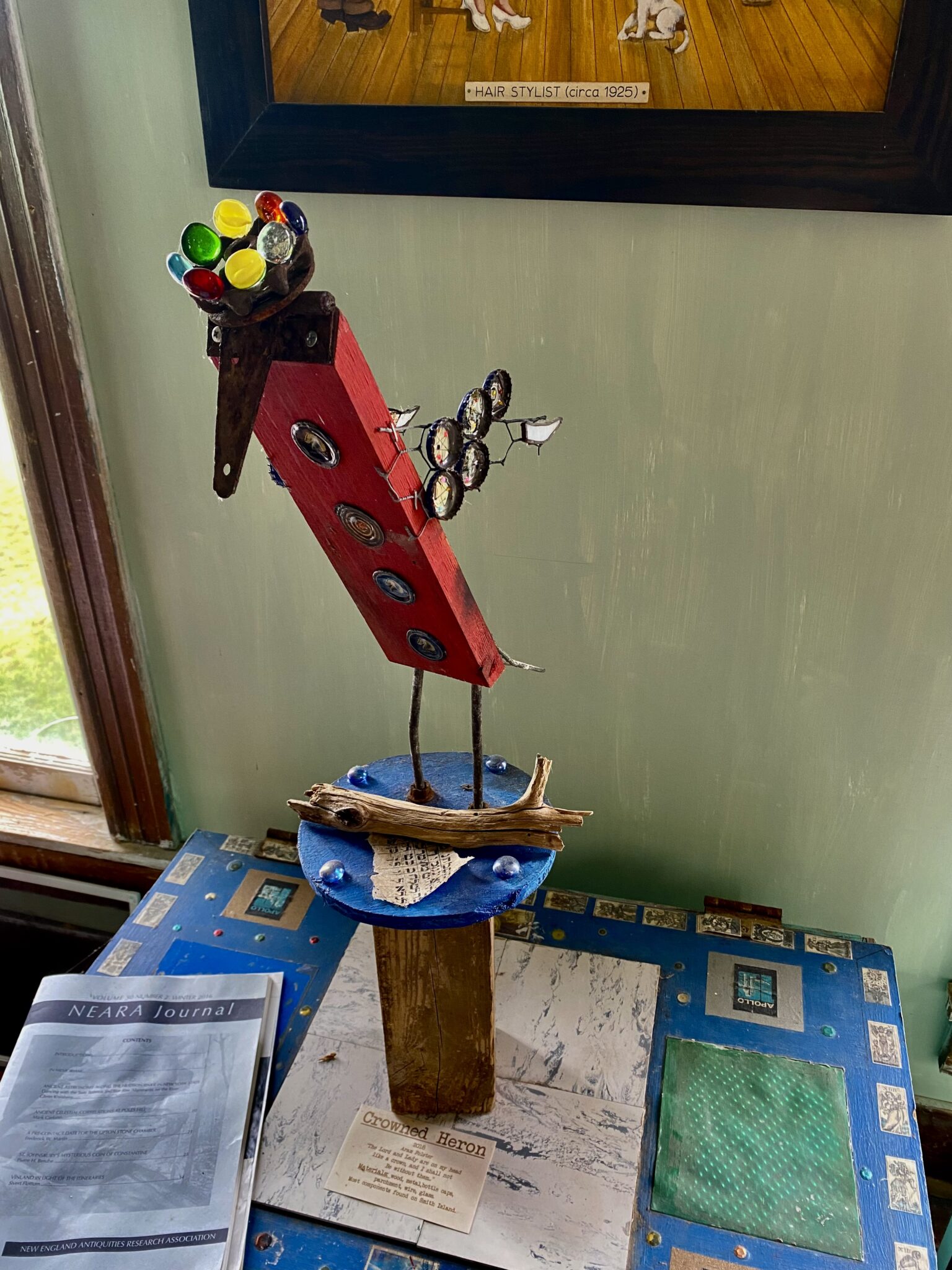
From series Injured Birds 3
“Everything has spirit, old rusty engines have an old soul,” explained Aram in our conversation about the magical realism in his art. “I can be creative here in this environment, more than in any other place. I like being near the water and collecting objects transformed by the environment and making them into birds. I am into metal. I am interested in how metal objects are changed when rusting. I find here things that nobody here understands why I pick up, they don’t get it, I like the sight of decaying metal,” as he explained his creativity and his feelings about the island. Many of his artworks illuminate the interior of his house as Aram also makes lamps from his sculptures many in bird-like shapes. Aram’s art work defined by trash and lost objects he found on the Smith Island, is sustainable in sense of re-using material parts lost in the island landscape.
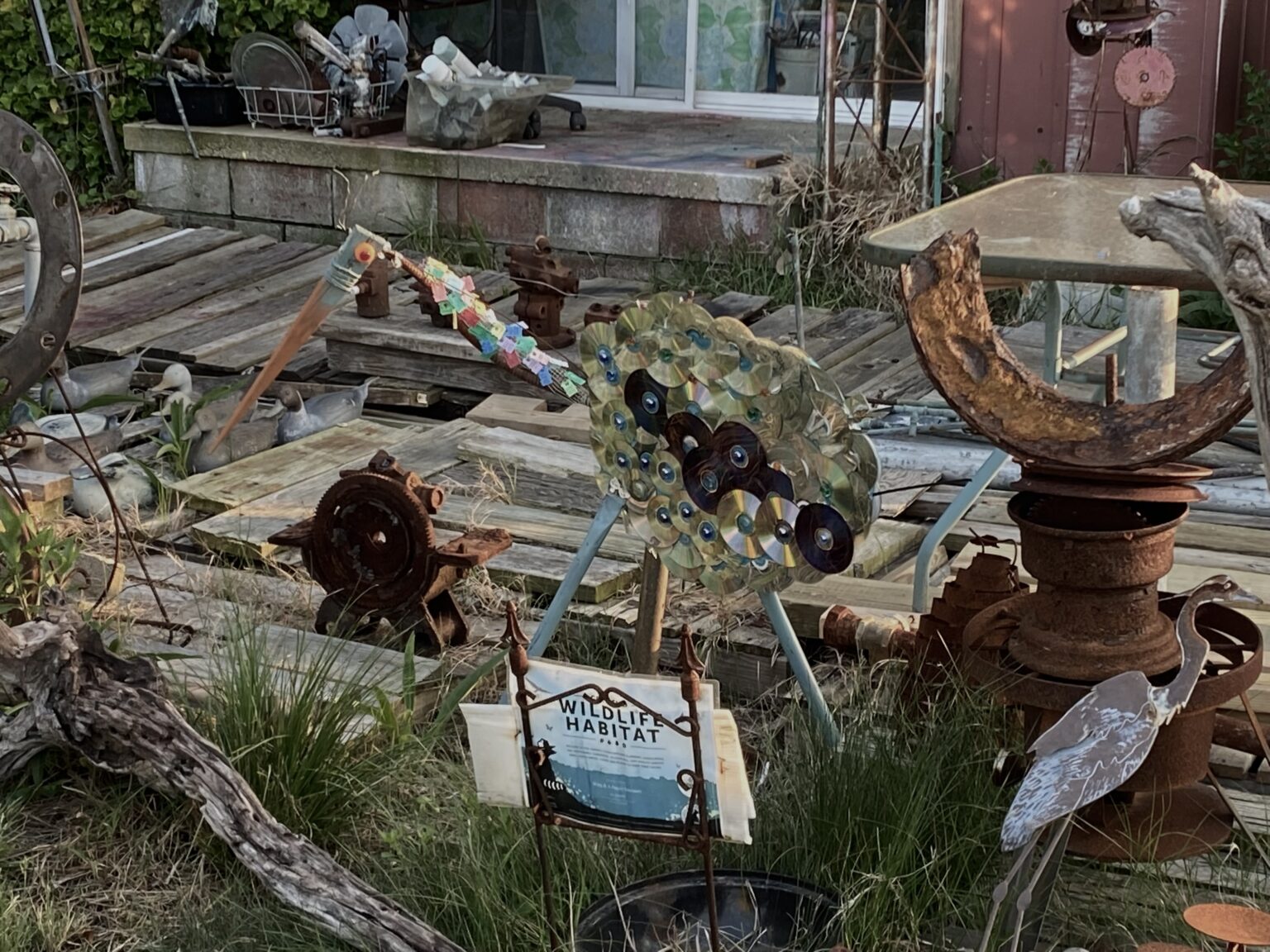
Aram’s Garden.
“I am into metal. I am interested in how the metal objects are changed when slowly rusting. I find here things that nobody understands why I pick up. I like the sight of decaying metal. Everything has spirit; old rusty engines have an old soul,” explained Aram. “Seeing the potential in things people discard. Every piece of trash has potential. It’s about re-imagining what people consider trash. My art is a way of showing other people the beauty in trash. It may stimulate others to tap into the creativity we all have, yet to be expressed. We all have creative potential but often lack the chance to unleash it. If you don’t have creativity, you just sit on the couch and die. Being in motion is a good thing.” What people throw out, I see potential in it. I see its personality that may become something. I see something [an object] and think that it can become something.
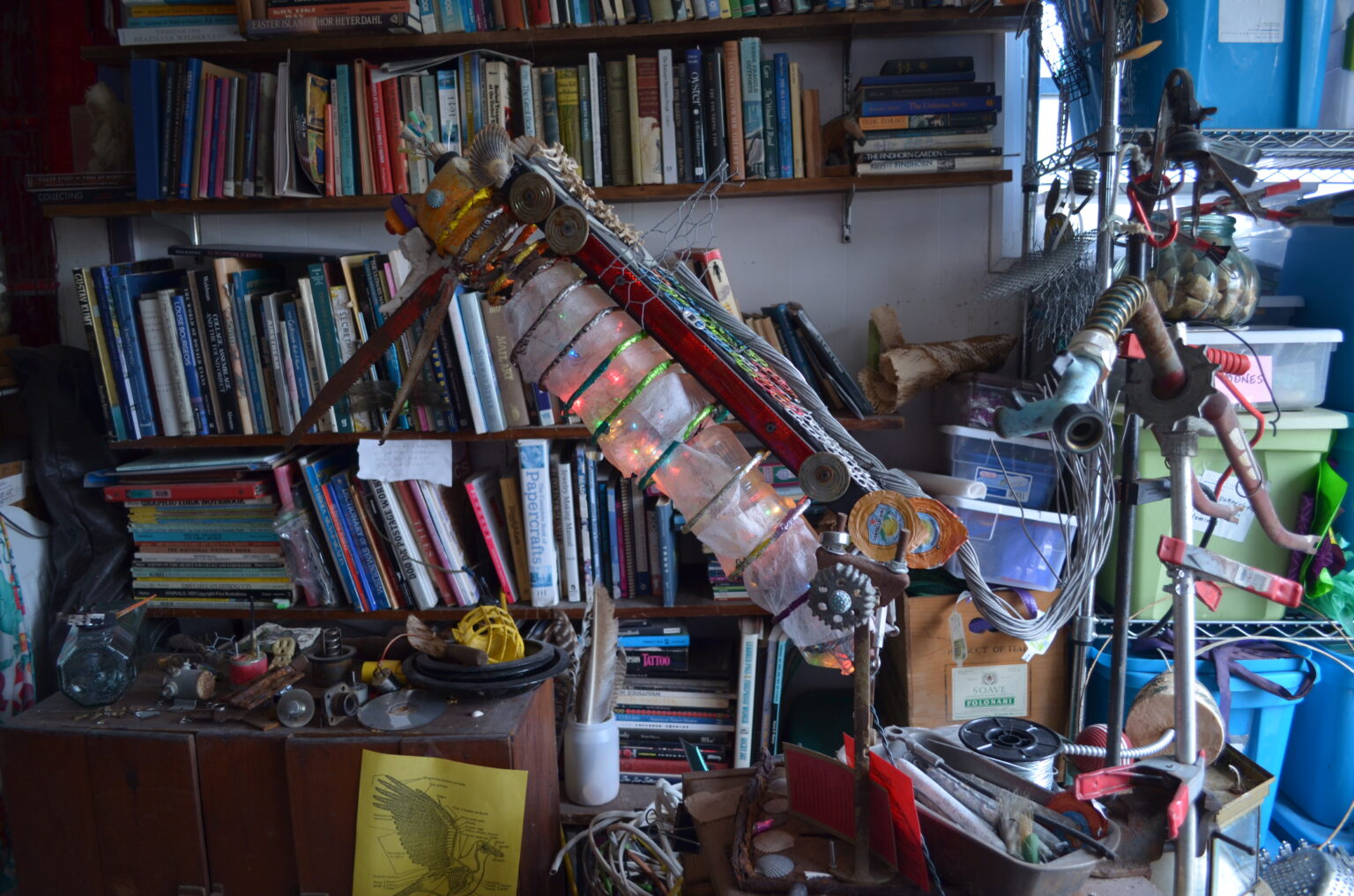
Light Bird
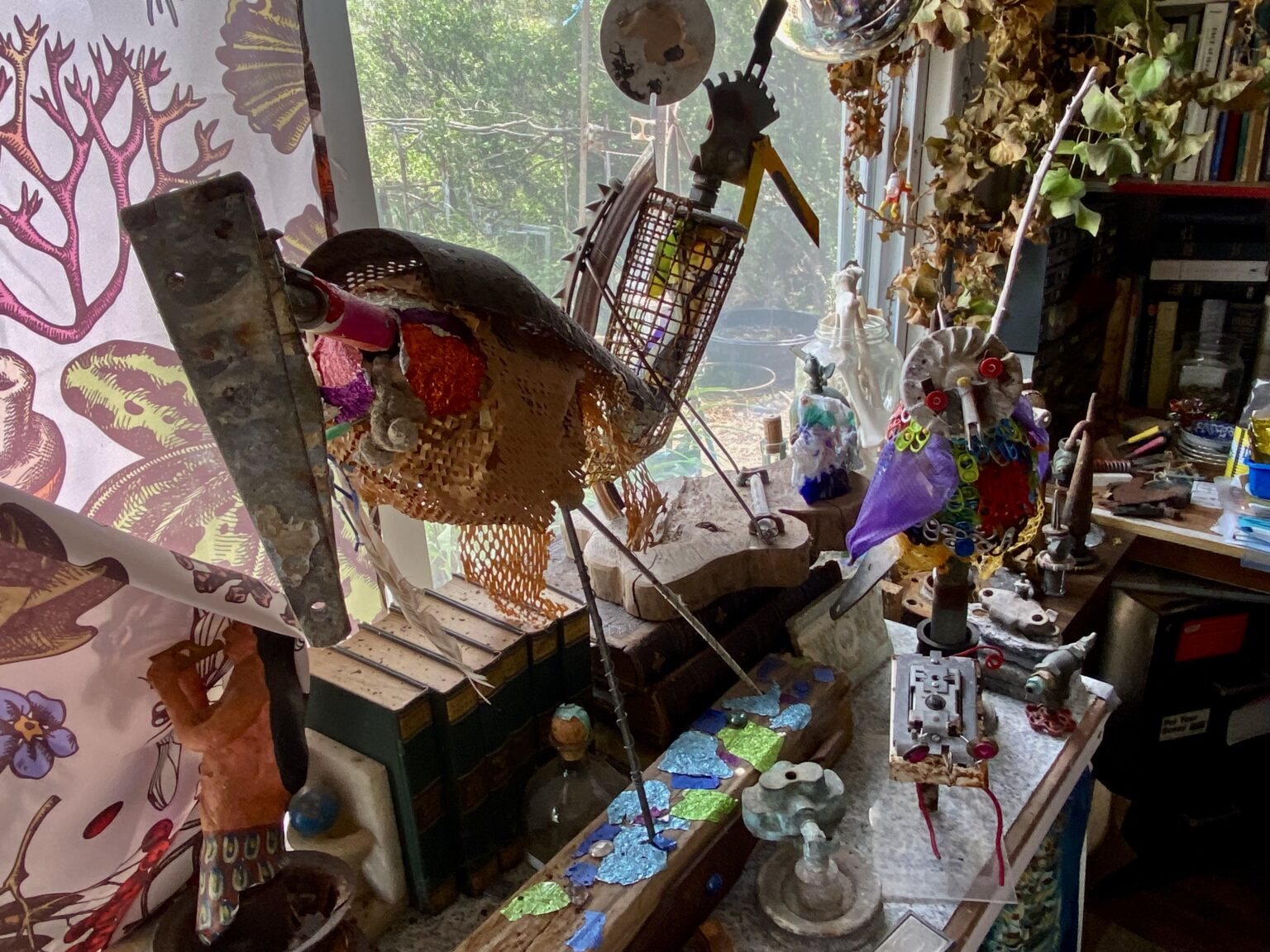
Early work, bird’s society
“My connection with the natural world is granted by birds. Years working in a sanctuary I have experience with birds. The roosters, turkeys, and visiting seagulls who find comfort on his land, are his family, separated from Aram’s kitchen only by the sliding glass doors. In his backyard, facing the marshland, Aram built a sanctuary for injured birds.” The seagulls, roosters and turkeys living in his yard are his family and separated from Aram’s kitchen with a dining table only by the sliding glass doors, the room he shares with his large white parrot, Freddy. Aram tells me, “All the birds living here are part of my family, they have personality, and they are doing who they are, I love their wildness. They are themselves, embodied in my home. They have their personalities, they have the right to their language, and they are who they are. I know them, and they know our established relationship. They are my calling. They are where my money is going. My life. They are my family.
Artist Bio
Aram Polster was raised in NYC, but spent many years working outdoors with horses and other animals where he connected with the rural environment, enabling him to better understand our responsibilities to the planet. Coming from a family of collectors, creativity was encouraged and supported. Books and other art forms stimulated his imagination. Aram began assembling and creating sculptures from found and discarded objects, and would collect and re-envision many items most people would consider trash. Heavily influenced by a variety of religious teachings, and the artists who express the sacredness found in nature, Aram’s art strives to reflect the mystical and esoteric belief systems that exist outside of ordinary consciousness. After relocating to Smith Island, Aram was able to collect many items from around the island and
incorporate them into sculpture and mixed media art. It was an attempt to allow individuals to see the beauty in ordinary and broken things, and to highlight the wastefulness of our culture and the impact that waste has on the environment.
All proceeds from the sale of his art go to support the work of his animal sanctuary on Smith Island.
Aram can be reached at Smith Island Beans Coffee Roastery 802 952 8702 or smithislandroaster@gmail.com
Responses