
Saving Sylvester: Community Responses to Coal Contamination
Noah Dennison
When I first arrived in Sylvester, West Virginia, I met my host in the gravel parking lot of the old motel she’d recently renovated into the town’s first and only Airbnb. The building had been passed down to her by her uncle, she said, and she’d spent the previous year gutting, remodeling, and furnishing its twelve rooms. So far, bookings have been sparse since the Hatfield-McCoy Trail system – a relatively recent and lucrative addition to the southern West Virginian adventure tourism ecosystem – skips right over this part of Boone County. There are a few long-term tenants on the first floor, but the bulk of her out-of-town business is provided by visiting coal industry employees working out their contracts in the nearby Elk Run Complex. I was the first anthropologist she’d hosted.
After settling in, I visited Sylvester’s only restaurant, a quaint pizza shop next door to the motel, where I grabbed a quick sandwich and asked the owner about any nearby fishing spots he’d be willing to share with me. After all, it was a beautiful summer night in late July, and I had a few hours to spend in the water before sunset. He told me the motel where I was staying sat only a few hundred yards from Sylvester Pavilion Park which features several shelter houses, a baseball diamond, a basketball court, a playground, and direct access to the Big Coal River. I thanked him for his hospitality, finished my dinner, and returned to my car to grab my gear.
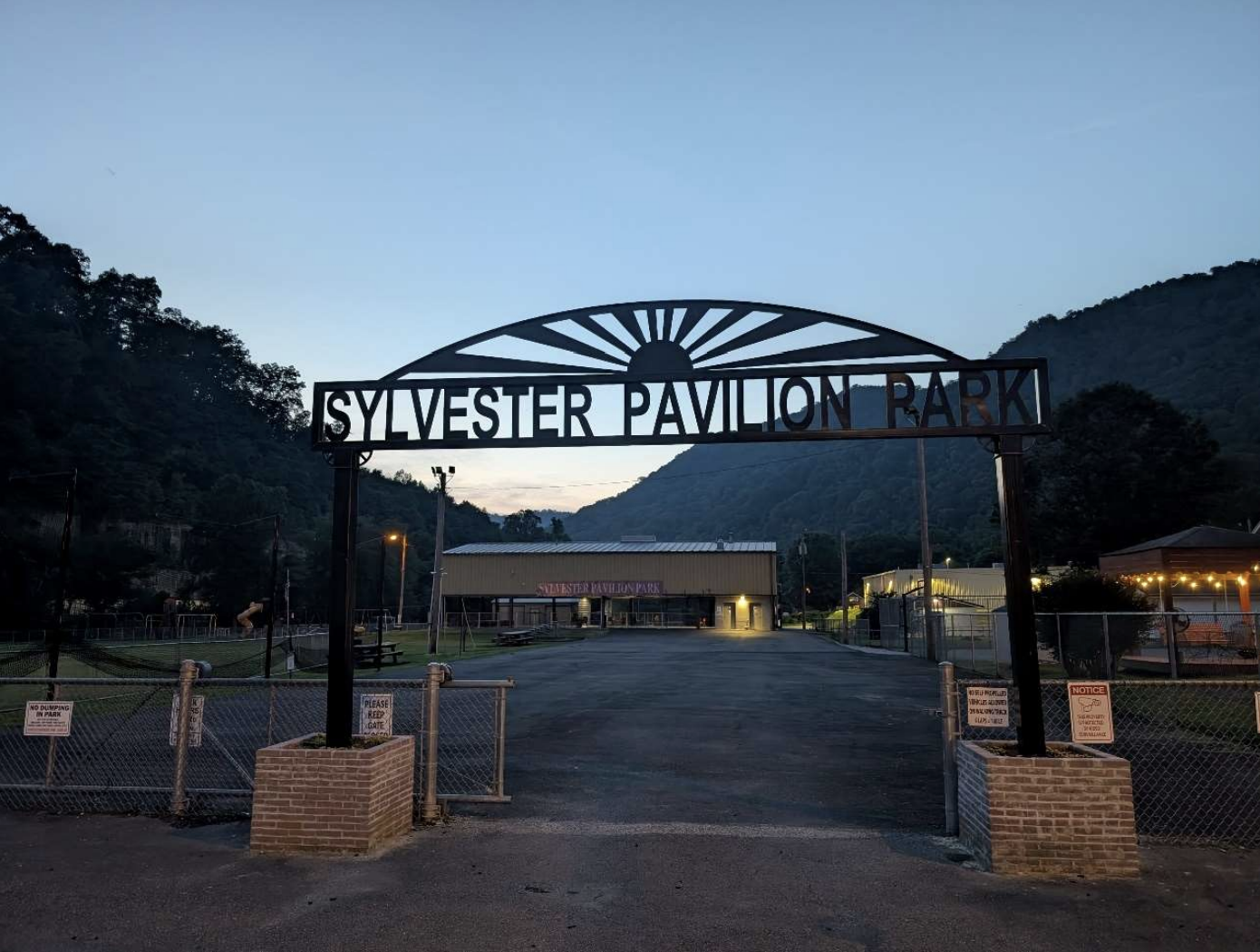
At the park, which locals and out-of-towners alike have proudly claimed is unlike any other in Boone County, I made my way past the fenced baseball field, down the embankment, and into a shallow part of the river. After collecting myself from an embarrassing slip down the muddy bank, I realized I wasn’t the only person who figured the balmy summer dusk would make for good fishing. About a hundred feet upstream, a family of six each waded with fishing poles in hand, casting into the brush along the opposite bank. We exchanged a few polite waves, and I watched as the father patiently instructed the youngest child in the process of rigging his tackle. The other three children took breaks between casts to splash in the water while watching their mother work to untangle her snagged line from an overhanging bush. It wasn’t her first missed cast, I gathered, as she vocalized her frustration before finally breaking off the line to try again.
Amid the sounds of the family playing and complaining and splashing and casting, and over the current of the shallow but quickly moving river, another sound awakened abruptly in the near distance. It was in this moment that I first felt, and then heard, the guttural groans and mechanized moans of the Elk Run Complex springing to life. A steady rumble reverberated off the mountains on either side of the Big Coal River, loud and low enough that it echoed through my chest before embedding itself in the base of my skull. At the opposite end of the spectrum of barely audible frequencies the squealing whine of large machinery wormed its way into my eardrums just a brief moment later. As I made my first casts into the cover of overhanging trees, the waves of mechanical noise ebbed and flowed, waning and crescendoing before pausing just long enough to remind us how peacefully quiet it had been only a few minutes earlier.
It was during one momentary sonic respite that I reeled in my first-ever fish from West Virginia waters. “Well, he caught one!” I overheard the patriarch of the young family say, dejectedly. As I pulled the modest smallmouth bass out of the water to remove the hook, I noticed the dark grey lines along the bottom of its gill plates – a telltale sign of ammonia toxicity or hypoxia caused by chemical pollution from industrial waste. Behind the opposite tree line, on the crest of the bank from which I’d caught this discolored and physically stunted fish, I located the likely source of its ailment.
Two rows of train cars sat nearly overflowing with freshly processed coal just up the hill and through the trees. A few weeks earlier, I’d spoken with a local activist who’d instructed me on how to quickly identify which of the countless coal-hauling trucks winding down WV Route 3 were filled past regulatory standards. I wasn’t sure if the same threshold applied to train cars, but if it did, these were certainly in violation. The overfilled cars loomed within spitting distance of the Big Coal River, with heaping black crests like malignant metallurgical miniatures of the mountains from which their contents were wrested – just as they had each day since Elk Run first opened for business in 1998.
In June of 2000, almost exactly twenty-five years before I arrived in Sylvester, the town’s residents won their first battle against Massey Energy and the Elk Run Complex. For their repeated regulatory violations which left the town coated in layers of coal dust, Elk Run was forced to suspend production for three days. Less than a year later, residents followed this small victory with a lawsuit accusing Elk Run of gross negligence amounting to several clear violations of the Surface Mine Control and Reclamation Act. In the spring of 2003, they won again. This time, however, the victory was more substantial. The court awarded nearly half a million dollars in damages to be paid to Sylvester residents, and the decision also forced the ElkRun plant to institute preventative measures to alleviate the town’s future exposure to harmful coal dust and clean up the mess they’d already made.
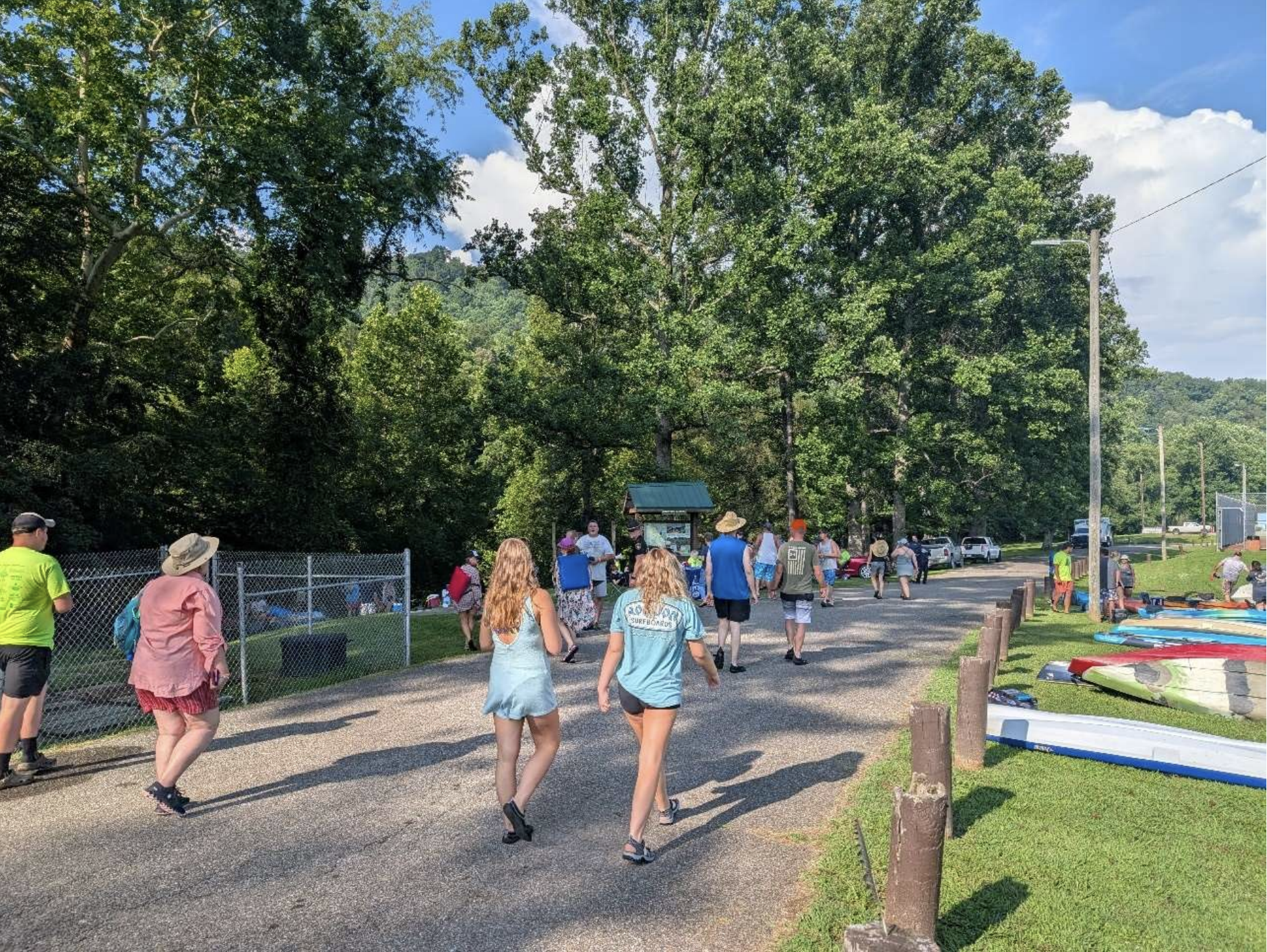
And what a mess it was. On the morning after my arrival, I spoke with a former Sylvester resident at Kevin’s Lazy River Adventure, an annual, ten-and-a-half mile community river float between two Boone County parks. He recalled witnessing schoolchildren leaving the playground at the now-shuttered Sylvester Elementary “looking like they’d been underground eight hours” almost every day during the first few years of Elk Run’s operation. He lives in Peytona now, about eighteen miles from Sylvester where he’d lived his entire life before Massey Energy bought him out. According to the terms of the non-disclosure agreement he signed as part of the deal, he couldn’t share what they paid him for his home, but he believed the number betrayed the Company’s desperation to get rid of him. He’d been one of the organizers of the petition to garner the necessary attention to cause the initial three-day work stoppage, and Massey Energy didn’t take kindly to troublemakers. He sold to Massey just as the town’s lawsuit was being filed.
As he shared his story, I noticed his ballcap memorializing the Upper Big Branch mine disaster – another particularly devastating example of Massey’s malfeasance which caused the deaths of 29 miners in early April 2010. “I knew a lot of those guys,” he said. “Yeah, real good guys. It’s a shame.” The UBB explosion and the cascade of violations uncovered by the ensuing investigation was by all accounts the tipping point for the Company. Increased scrutiny from state and federal regulators, including the Department of Justice, meant Massey was on the hook for over $200 million in fines and penalties. When ownership of Massey Energy’s assets and liabilities eventually transferred to Alpha Natural Resources, the Elk Run plant was one of Alpha’s new capital acquisitions, but so too was over a quarter-of-a-billion dollars’ worth of Massey’s “systematic, intentional, and aggressive” criminality.
Today, Elk Run, now a subsidiary of Alpha Natural Resources Holdings Inc., continues to process over one million tons of coal per year. And while residents are no longer blanketed by toxic dust from the plant, chemical pollutants like iron and selenium are still elevated in many parts of Sylvester’s cherished Big Coal River. But despite these toxic traces of Massey’s legacy and the near-constant auditory reminders of Alpha’s looming presence, there are moments of quiet resistance, too. There are parents sharing, teaching, and enjoying mountaineer lifeways in the warm, midsummer night stream, and there are children laughing, splashing, and casting right alongside them. There are kind-but-grizzled veterans in the fight against the Company’s wrongdoing who gather to watch proudly as hundreds of kayakers, rafters, and waders begin winding their watery way downriver for this year’s big float; and there are the volunteers tasked with preparing more than five-hundred donated hot dogs and ears of corn at the community picnic awaiting those who finish the journey. In Sylvester and throughout Boone County, there is a long history of resistance to environmental degradation which challenges us to imagine the ways we might respond to persistent traces of toxicity both elsewhere and otherwise. There is life in the impaired waters of the Big Coal River, and there is still a community here fighting to protect it.